13 to 18 March 2026
From Casablanca we drove to the Sahara Desert on the Algerian border, over the Atlas mountains, then back to Marrakesh. We covered 1,500 km in 5 days and saw life in the mountains and the desert. A fabulous journey.
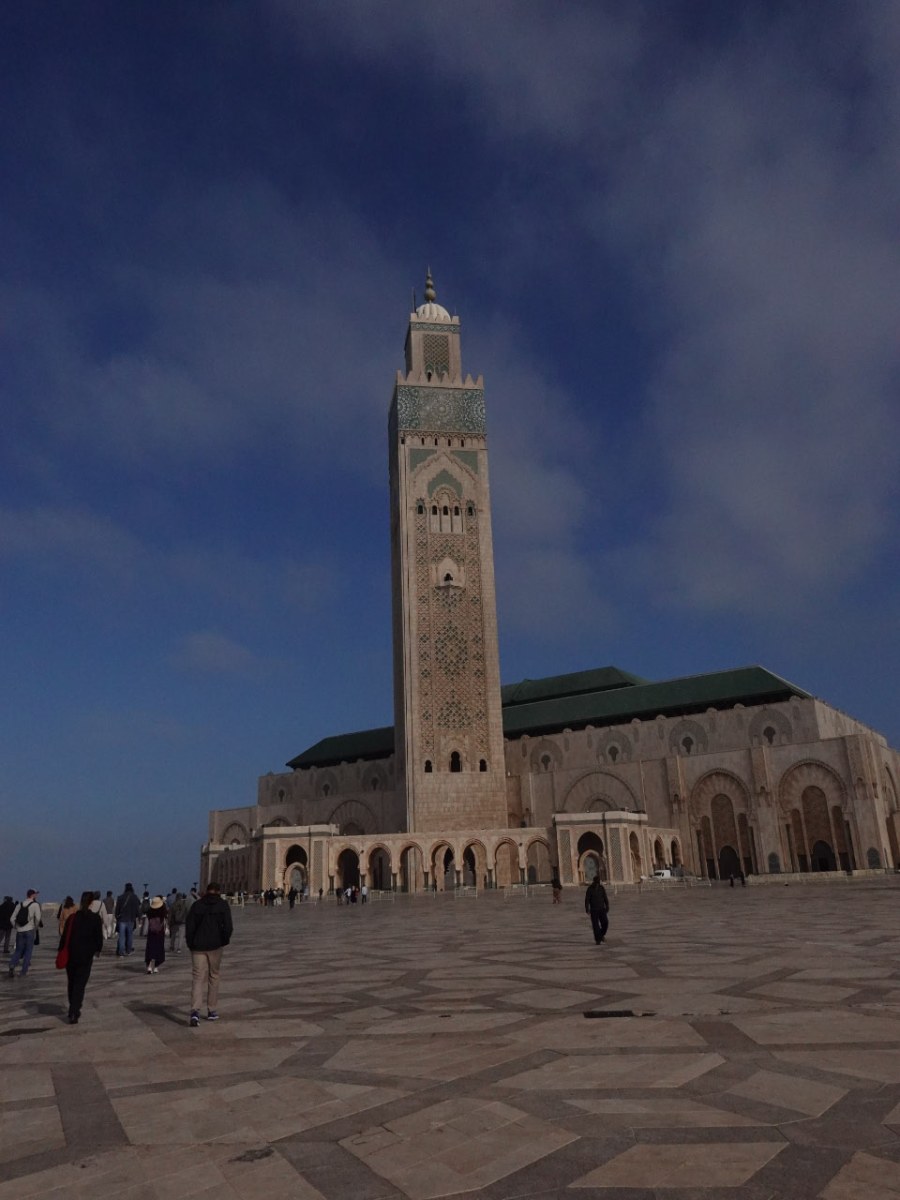 Hassan II Mosque, Casablanca MA
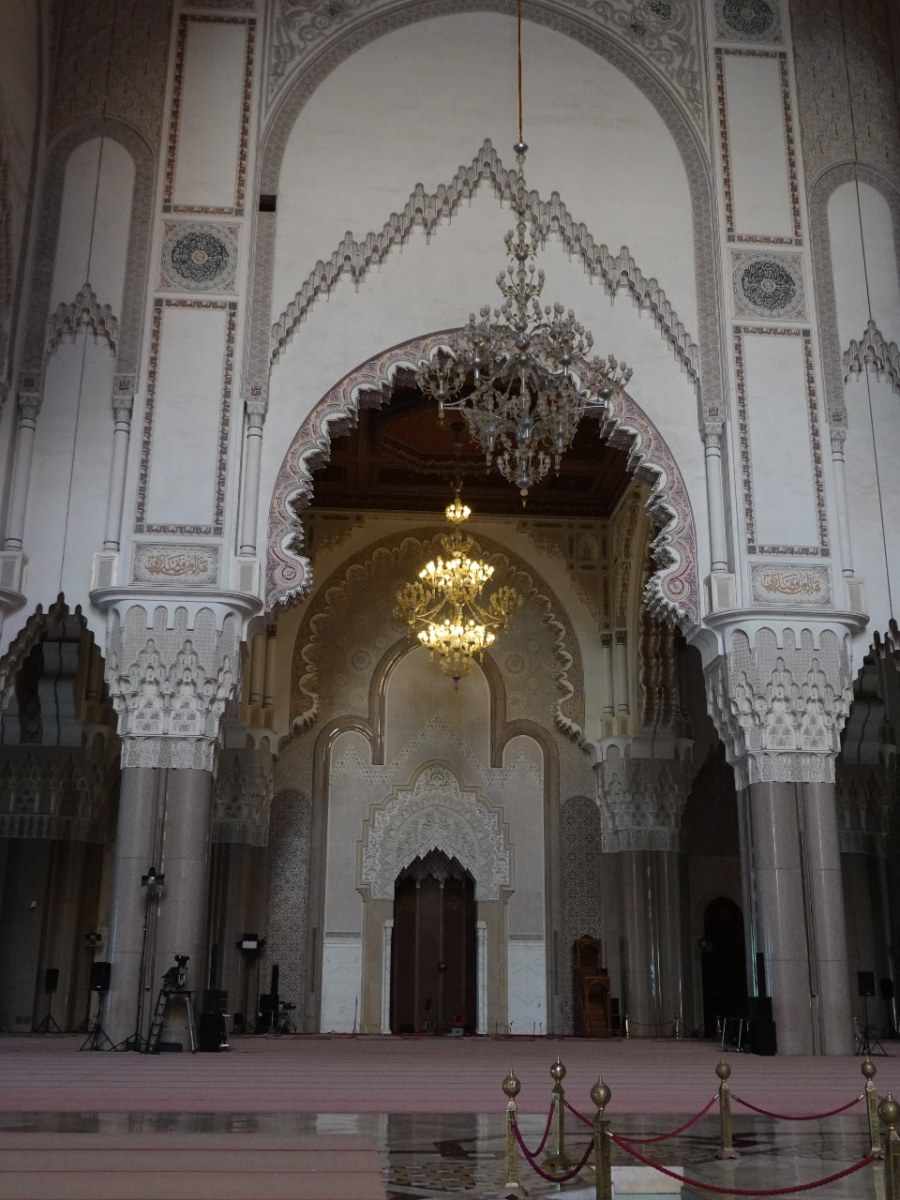 Hassan II Mosque, Casablanca MA
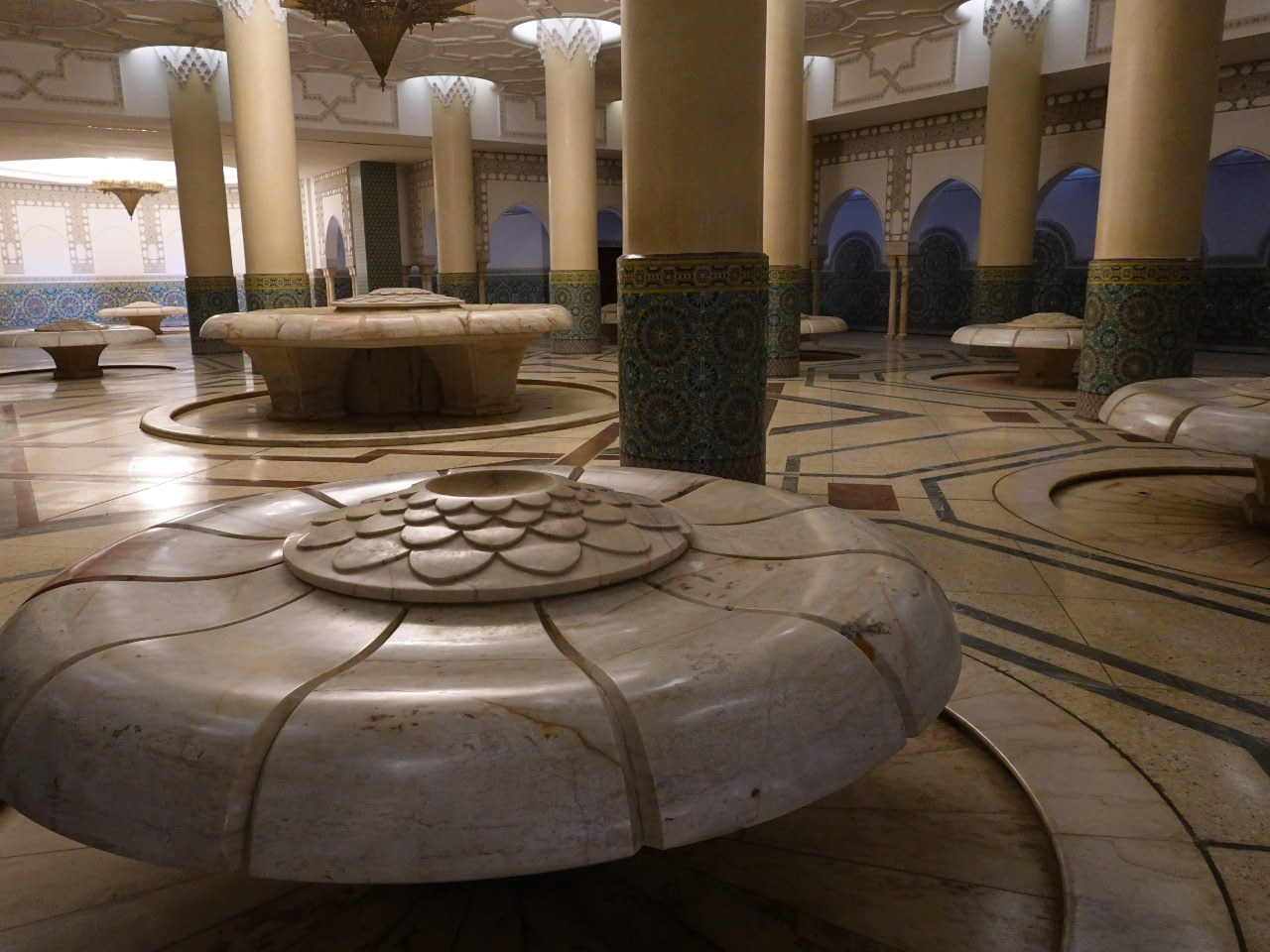 Ablution rooms, Hassan II Mosque, Casablanca MA
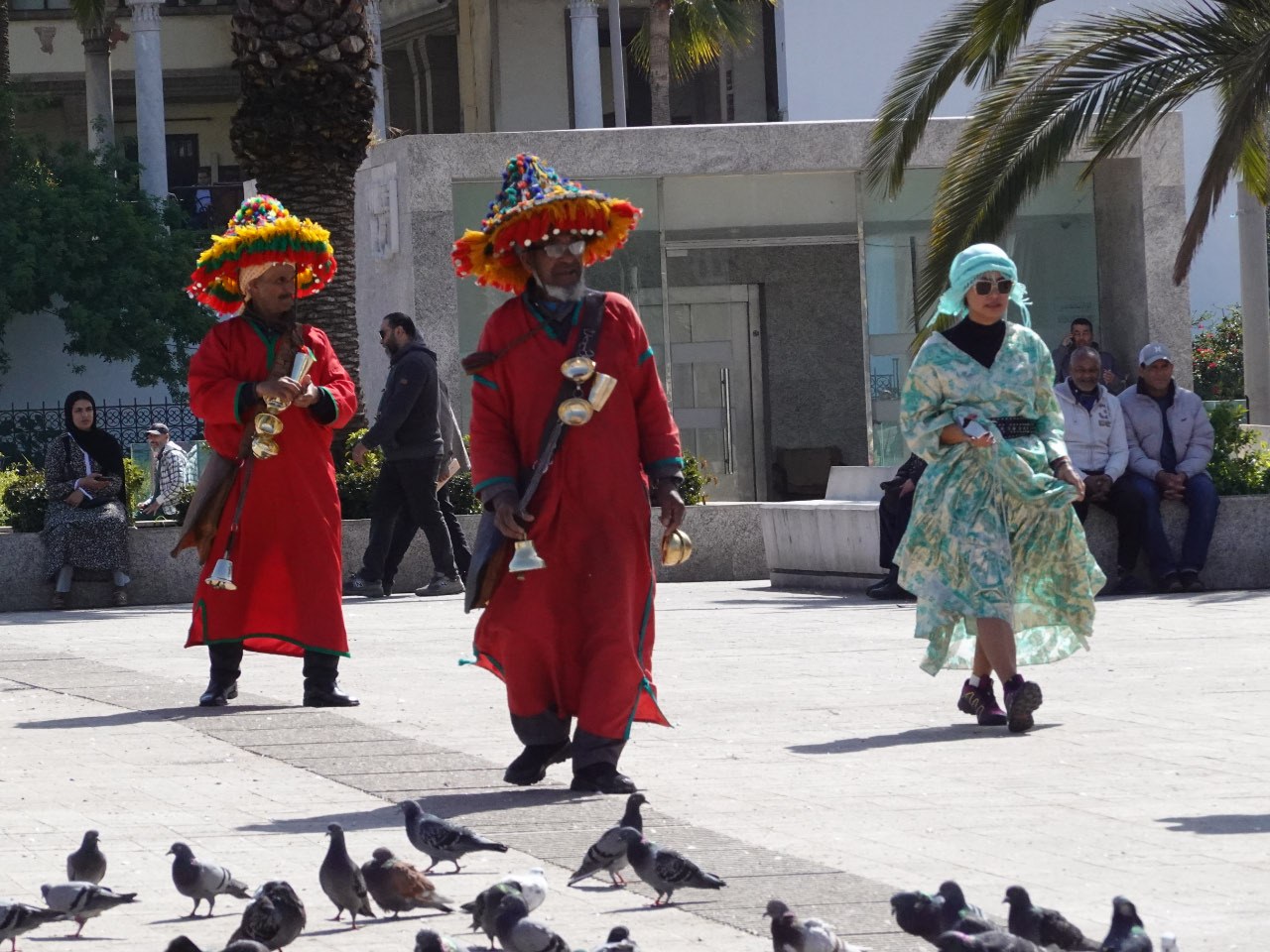 Water sellers and pigeons around the fountain in Charles V Square, Casablanca MA
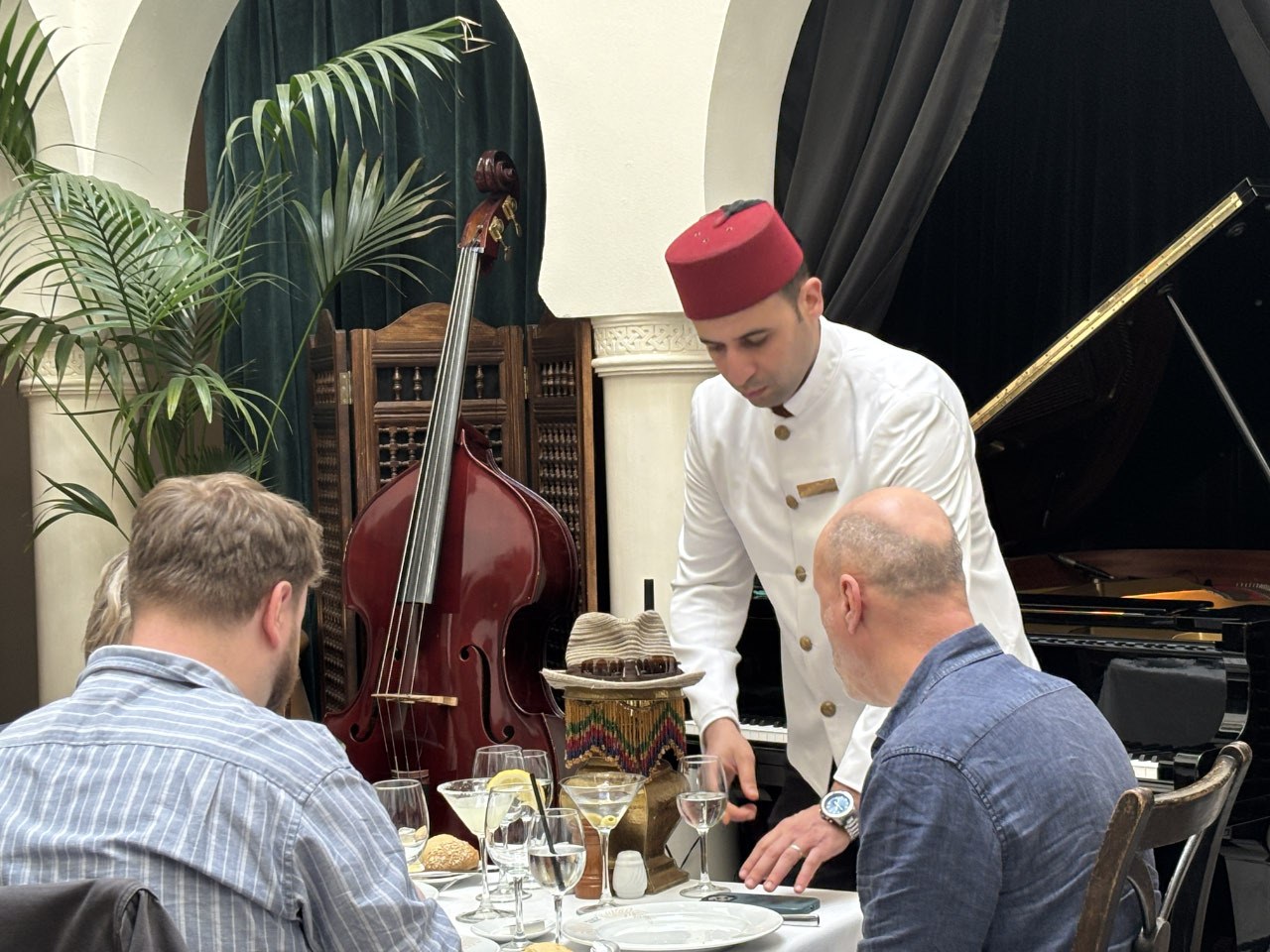 Rick's Cafe, reincarnation of the famous bar in the movie Casablanca MA
 The Souq in Rue Ibn Khaldoun, Casablanca MA
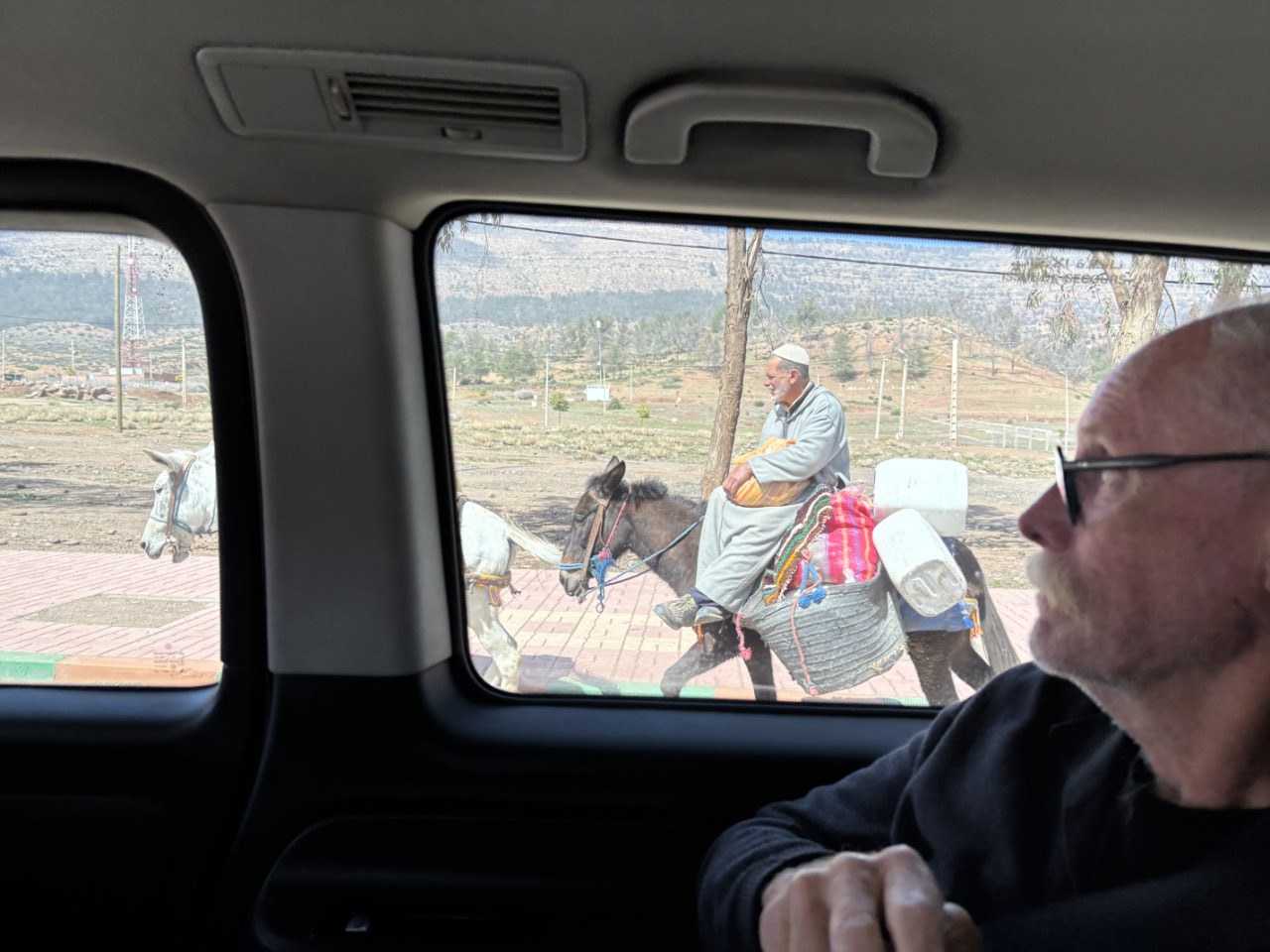 Market day in Asni MA
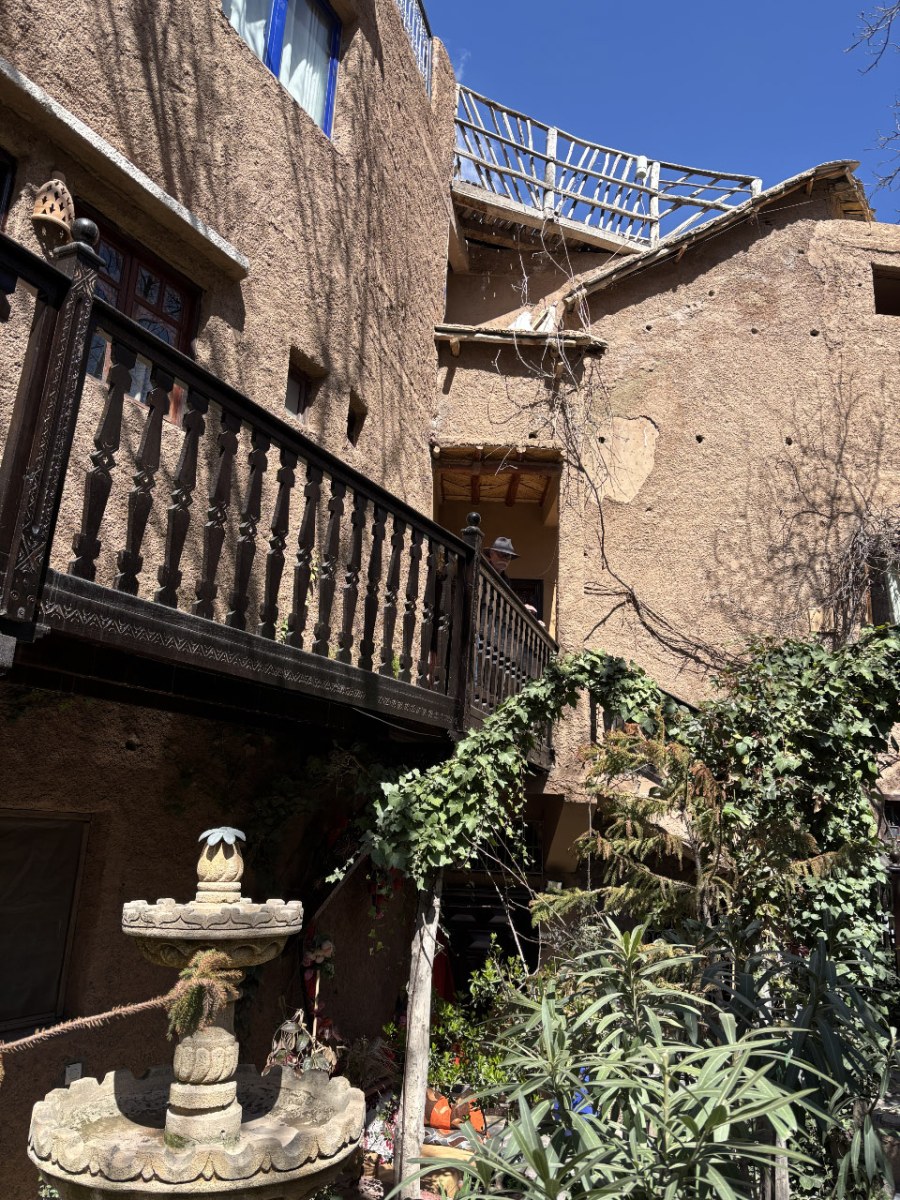 Riad Oussagou Hotel, Imlil MA - room 2
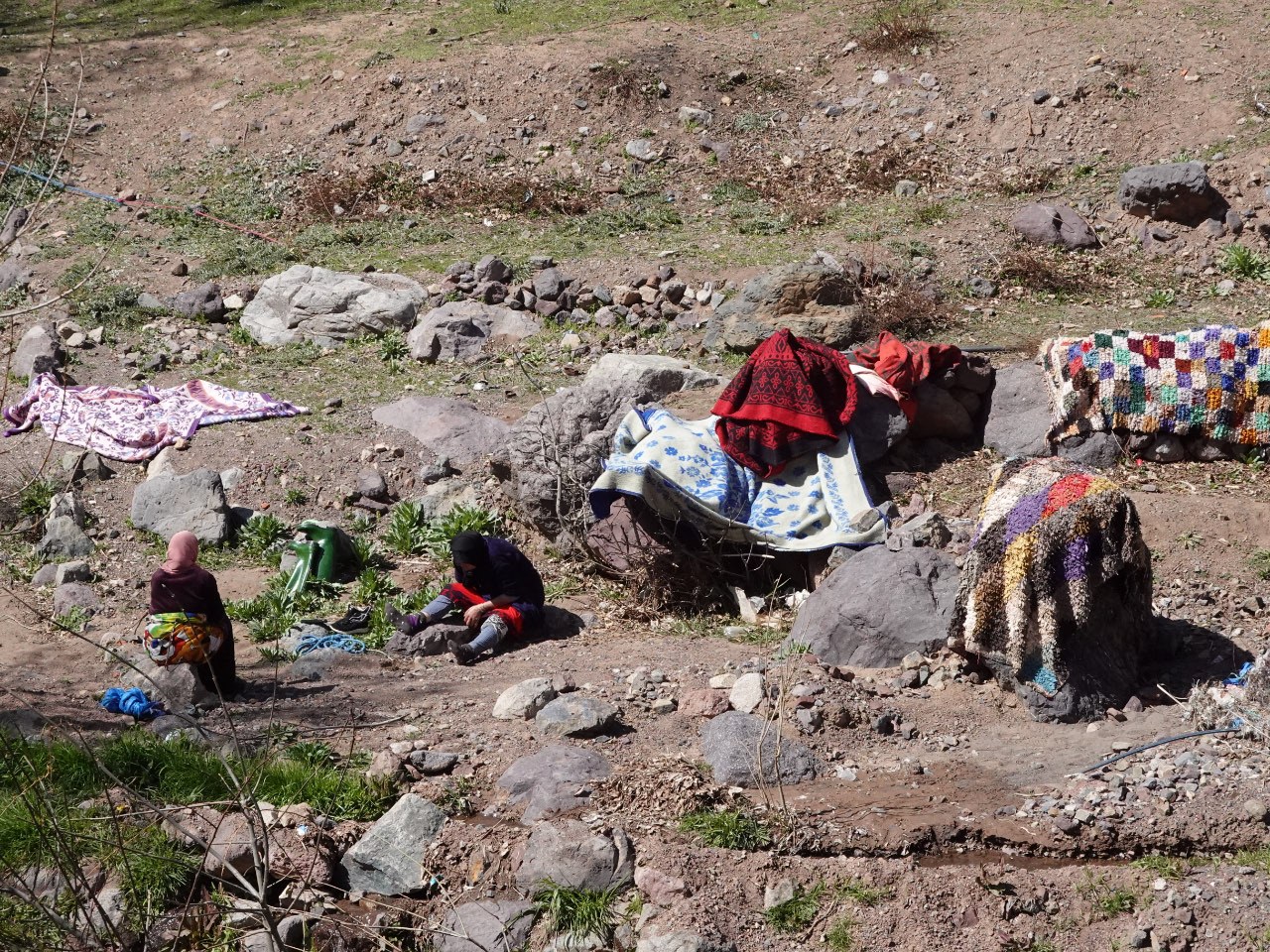 Washing Day. A walk through the village of Imlil in the Atlas Mountains MA
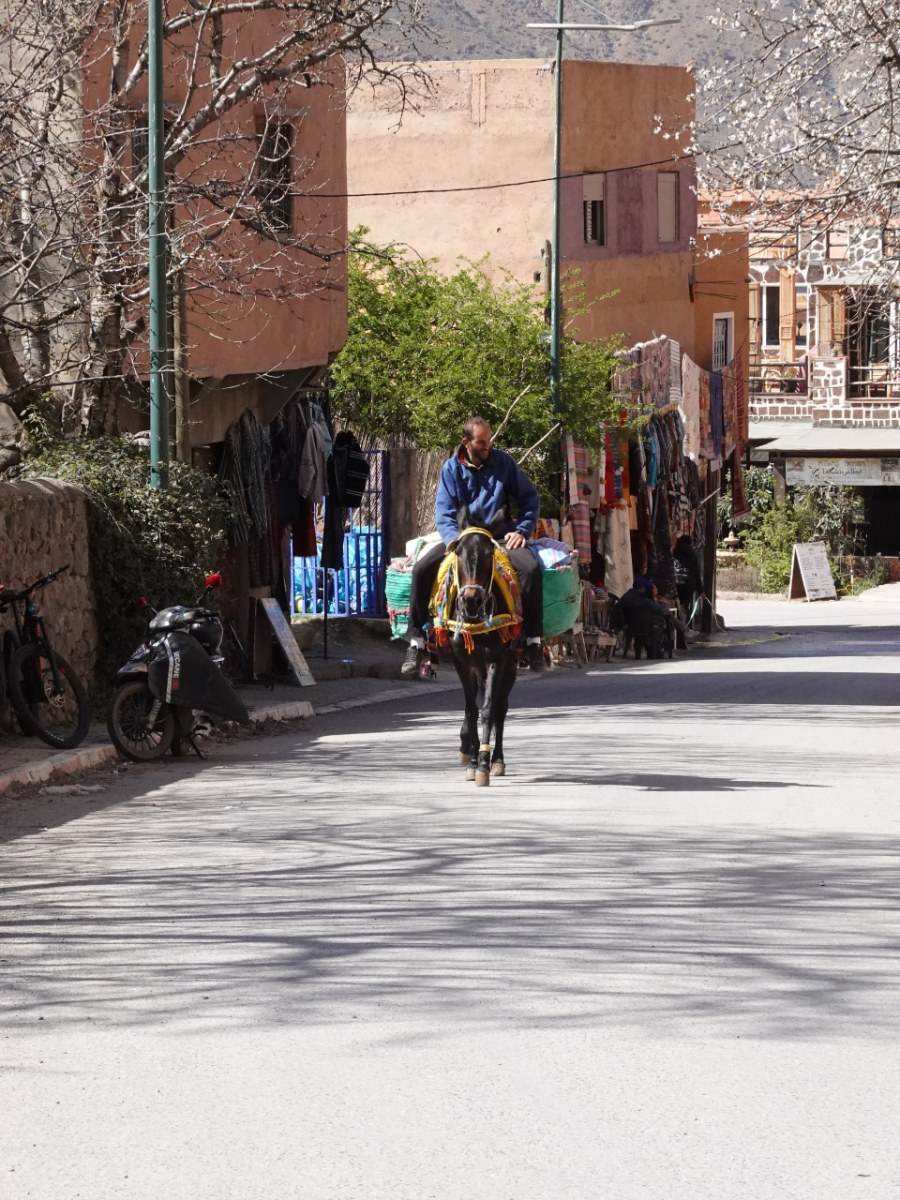 A walk through the village of Imlil in the Atlas Mountains MA
 A walk through the village of Imlil in the Atlas Mountains MA
 Col du Tichka, highest pass at 2,260m, Atlas Mountains MA
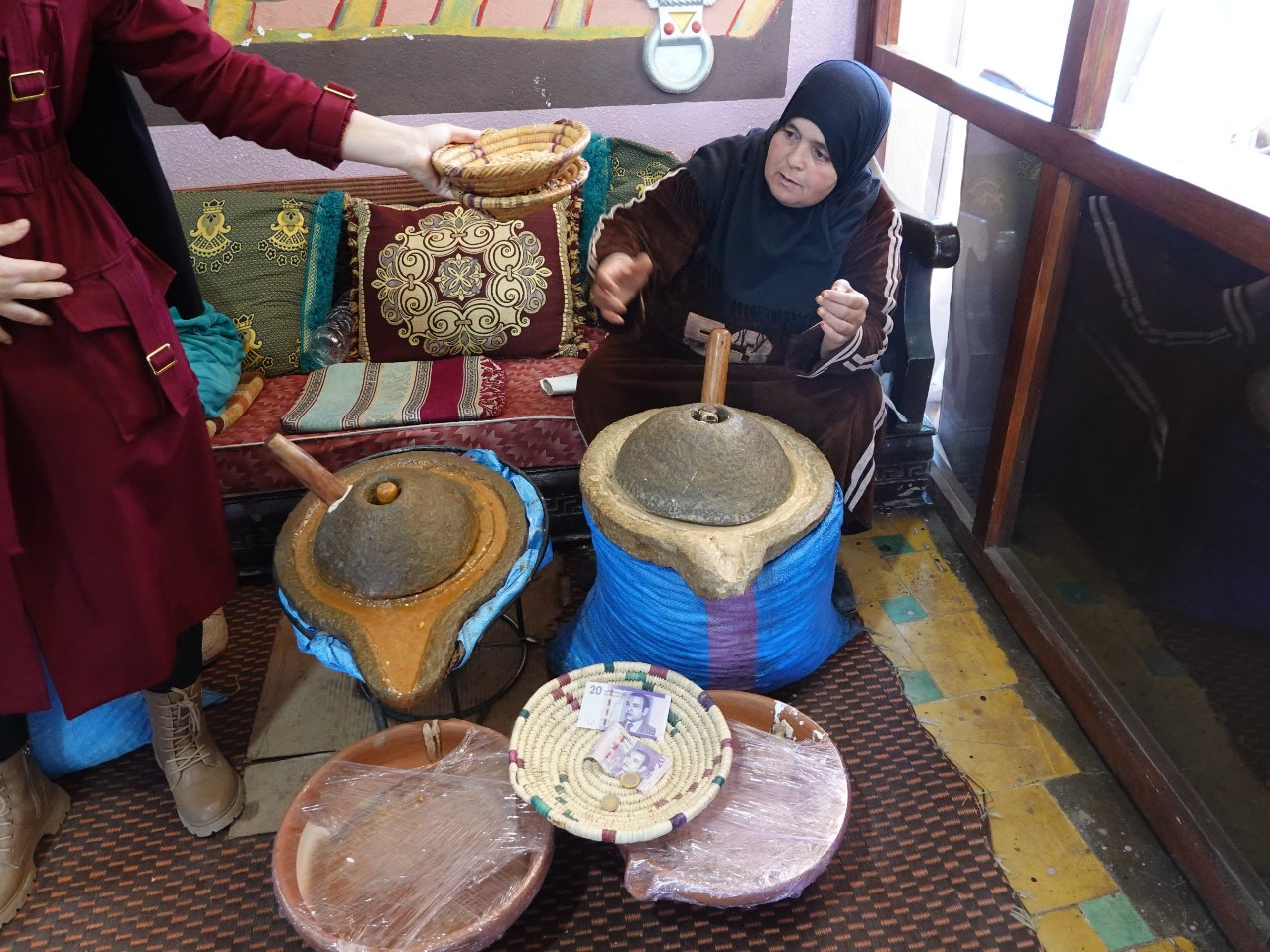 Argan oil shop at Ighrem N'Ougdal MA
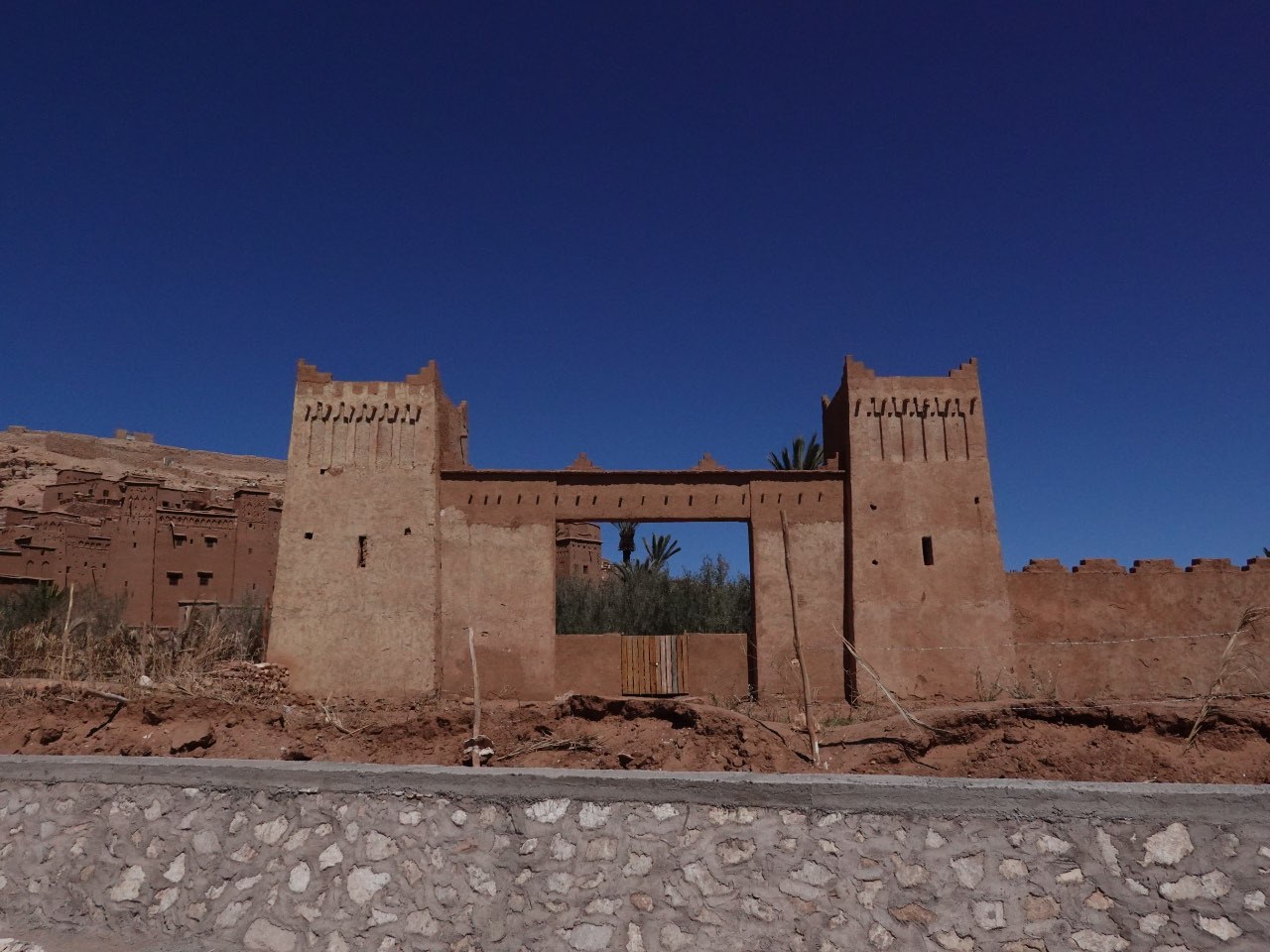 Kasbah de Ait Ben Haddou near Dades MA
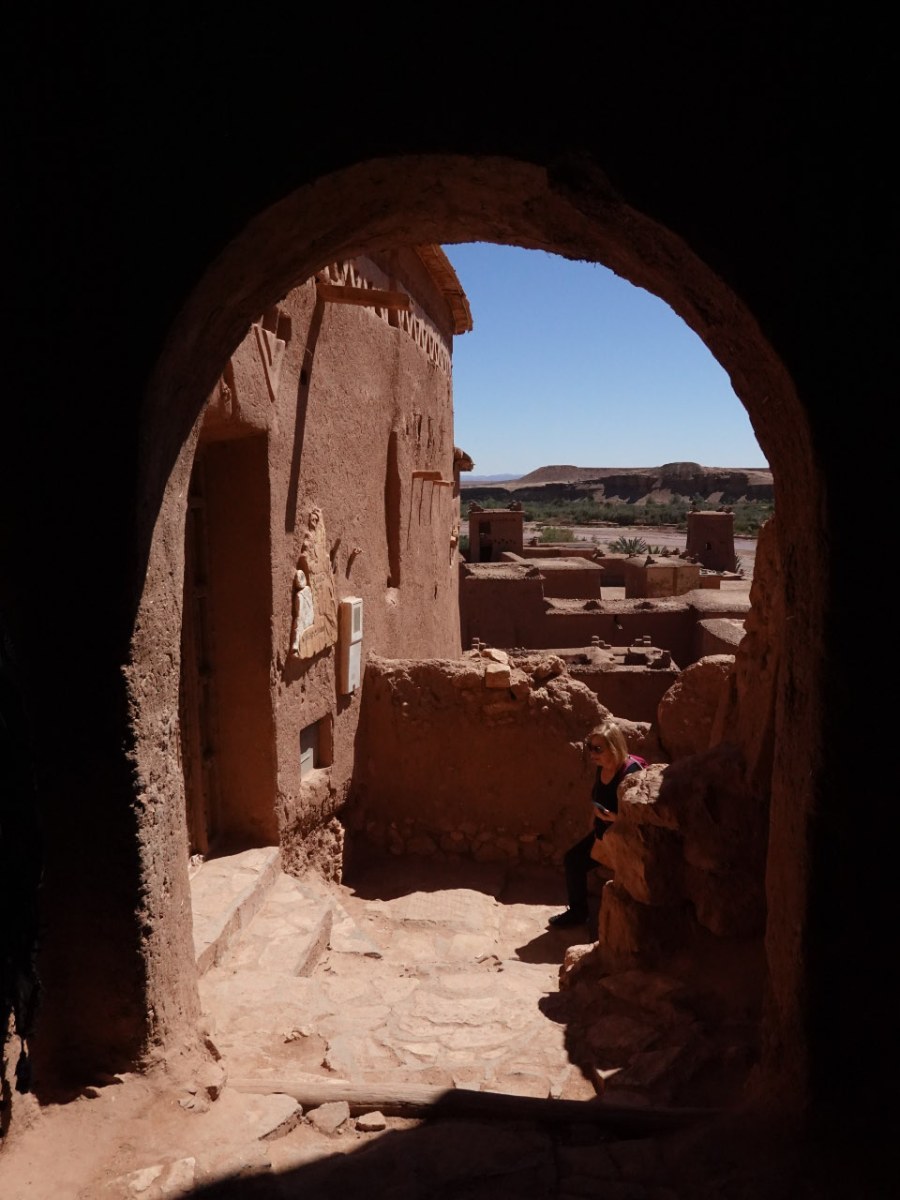 Kasbah de Ait Ben Haddou near Dades MA
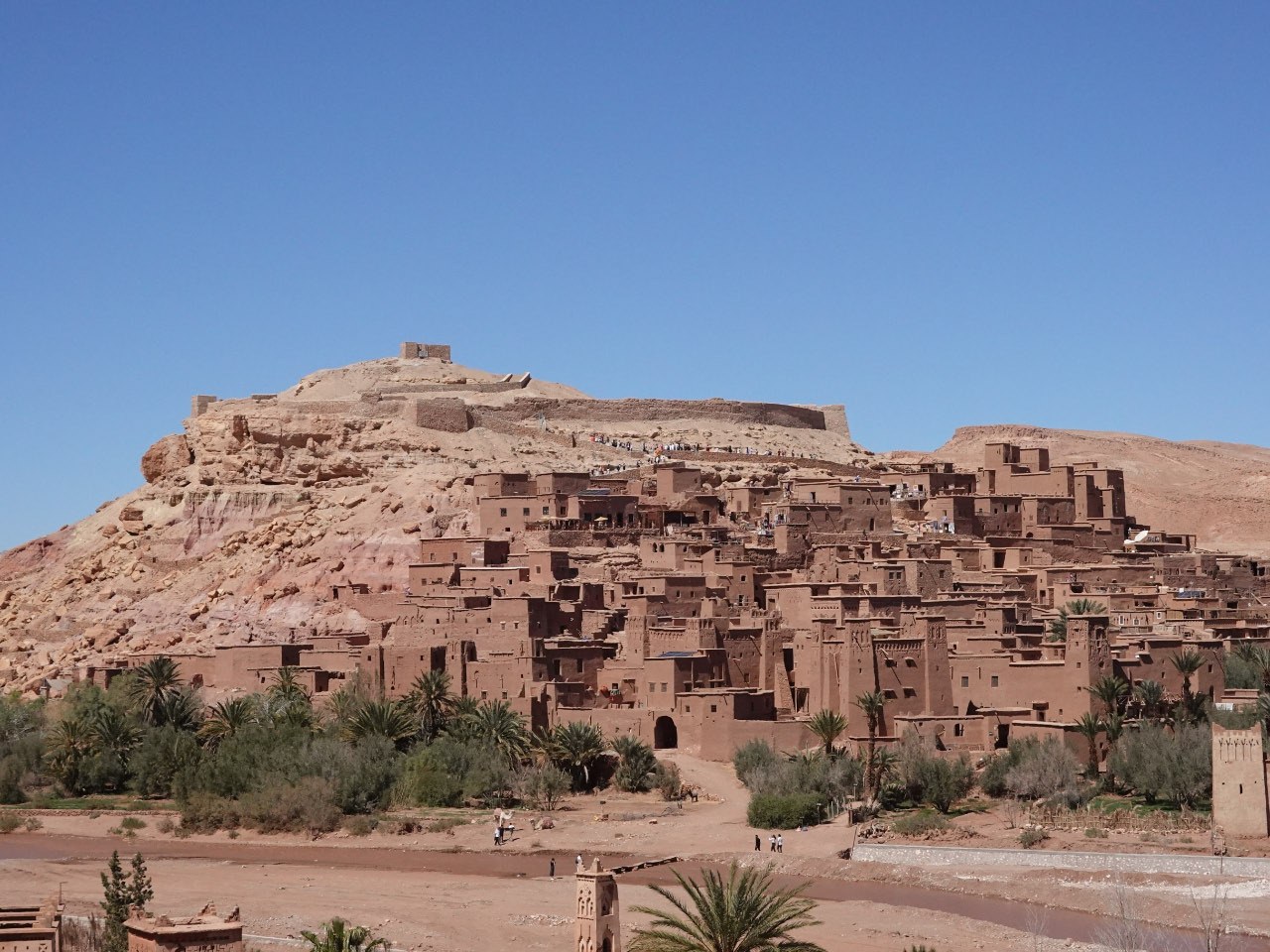 Kasbah de Ait Ben Haddou near Dades MA
 Welcome to Xaluca Dades Hotel, Dades MA
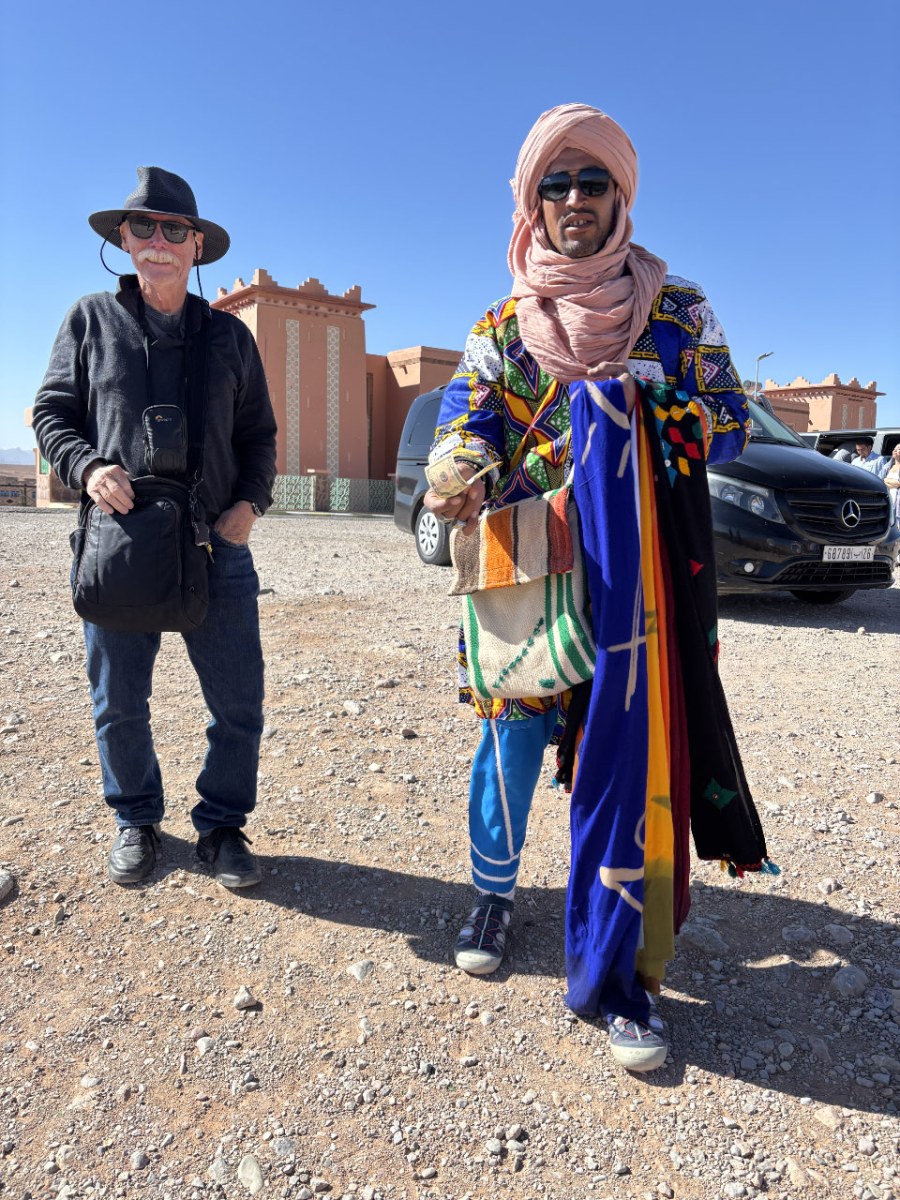 Viewpoint of the oasis near Tinghir MA
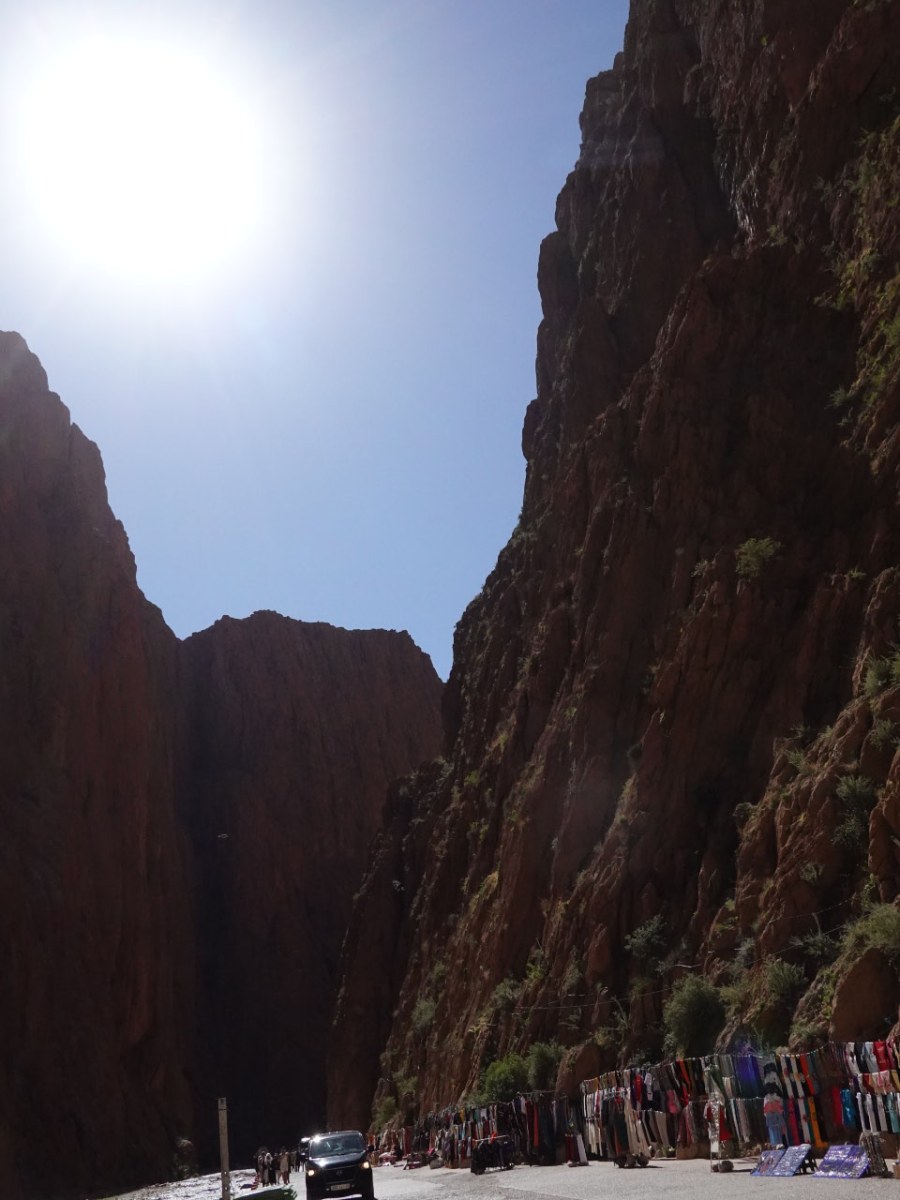 Todgha Gorge near Tinghir MA
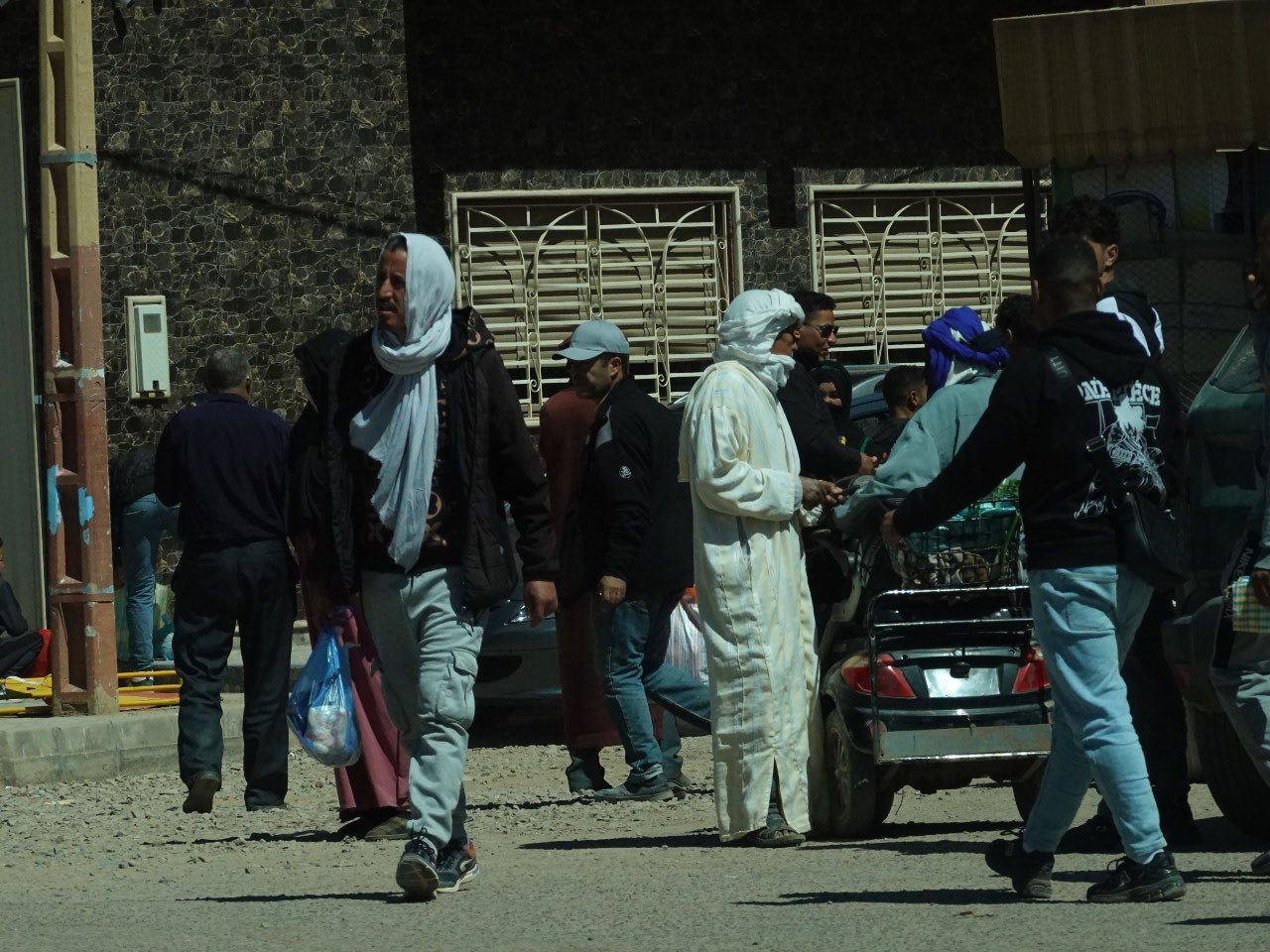 Market day in Alnif MA
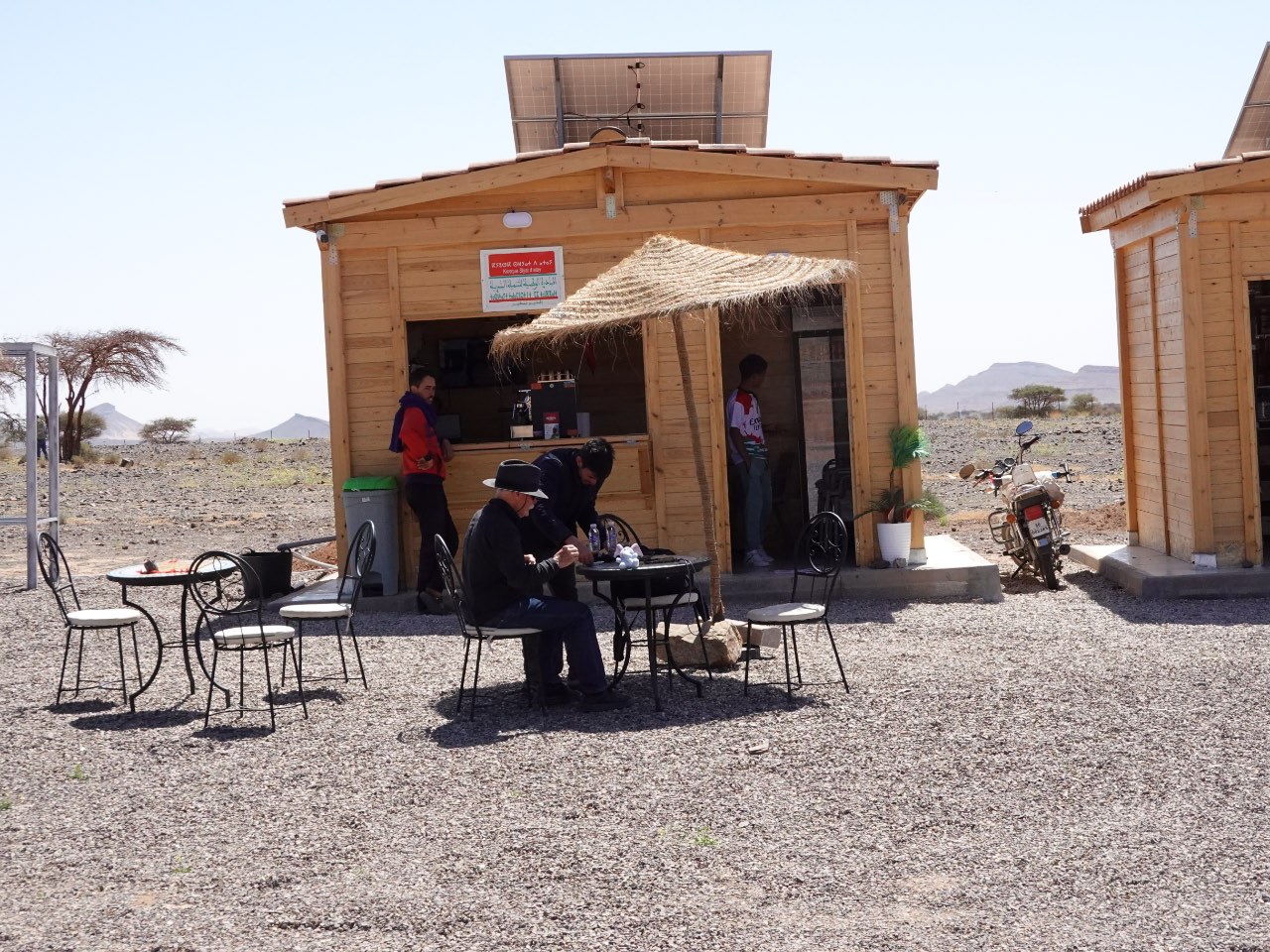 Coffee stop on the road at M'Ssici MA
 Little girls showing off their henna (specially to end Ramadan), Ksar Abouam in Rissani MA
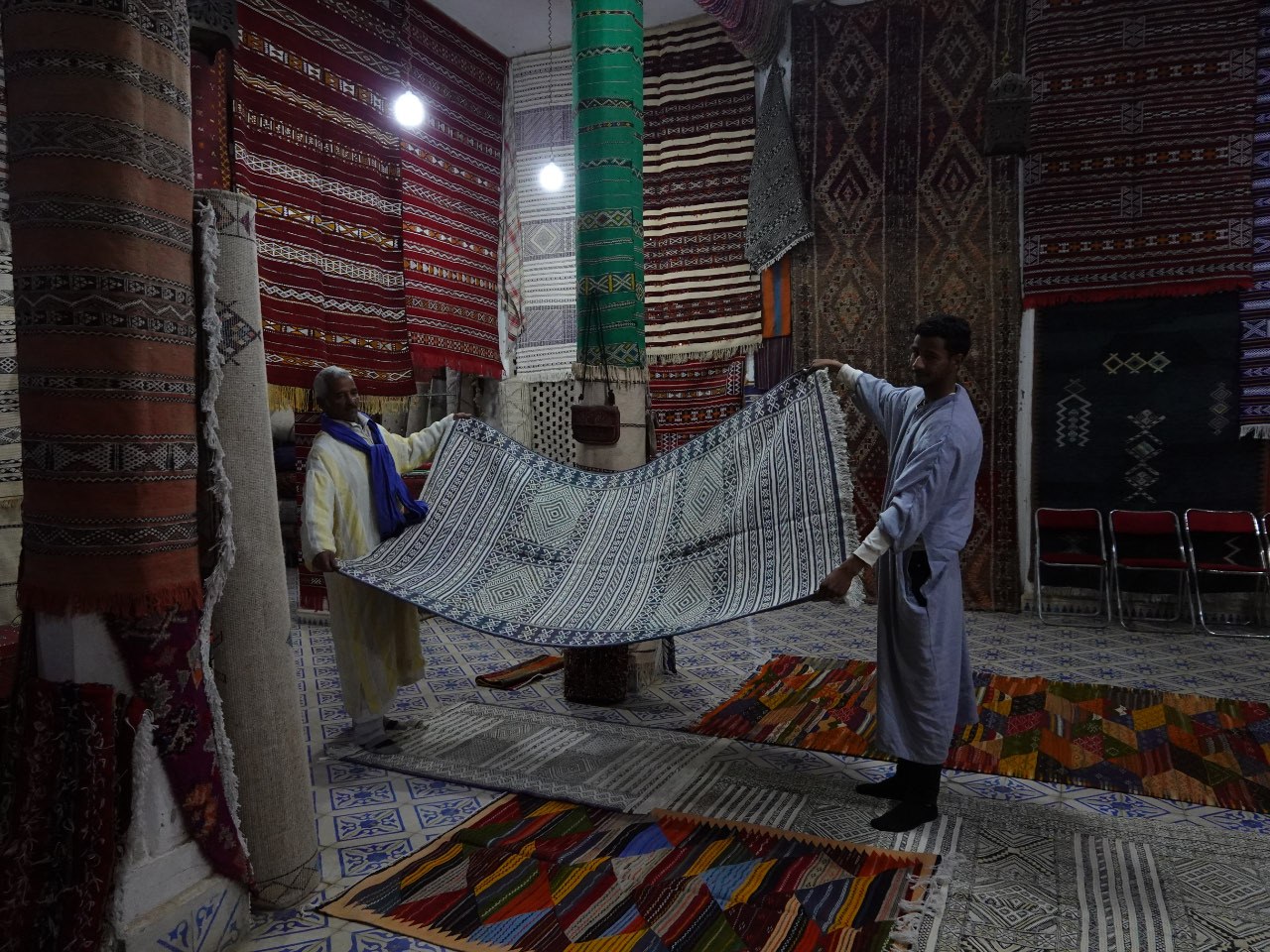 The Berber rug shop, Ksar Abouam in Rissani MA
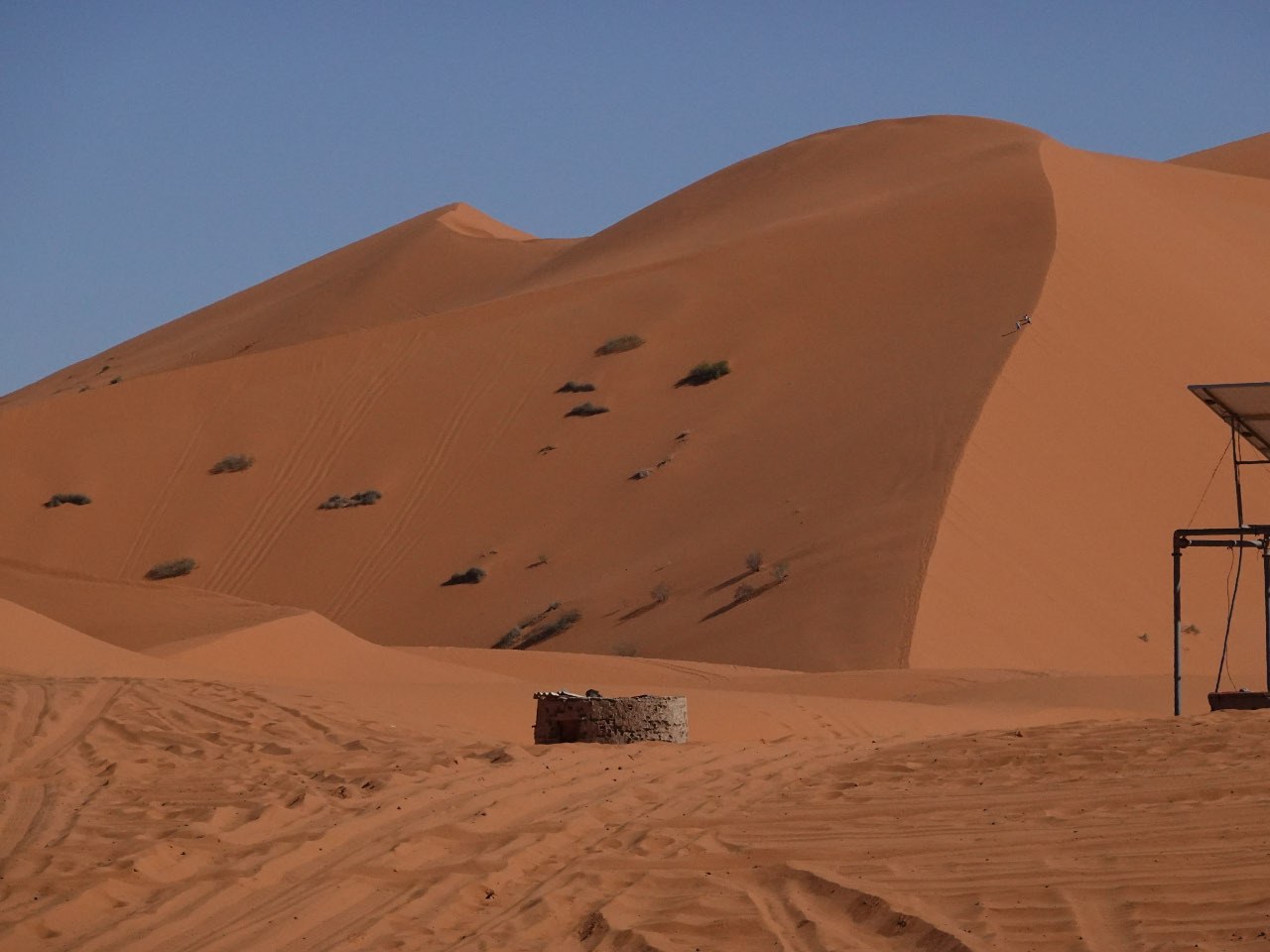 Sand dunes at Merzouga MA
 The drive to the Sahara Sky Luxury Desert Camp, Merzouga MA
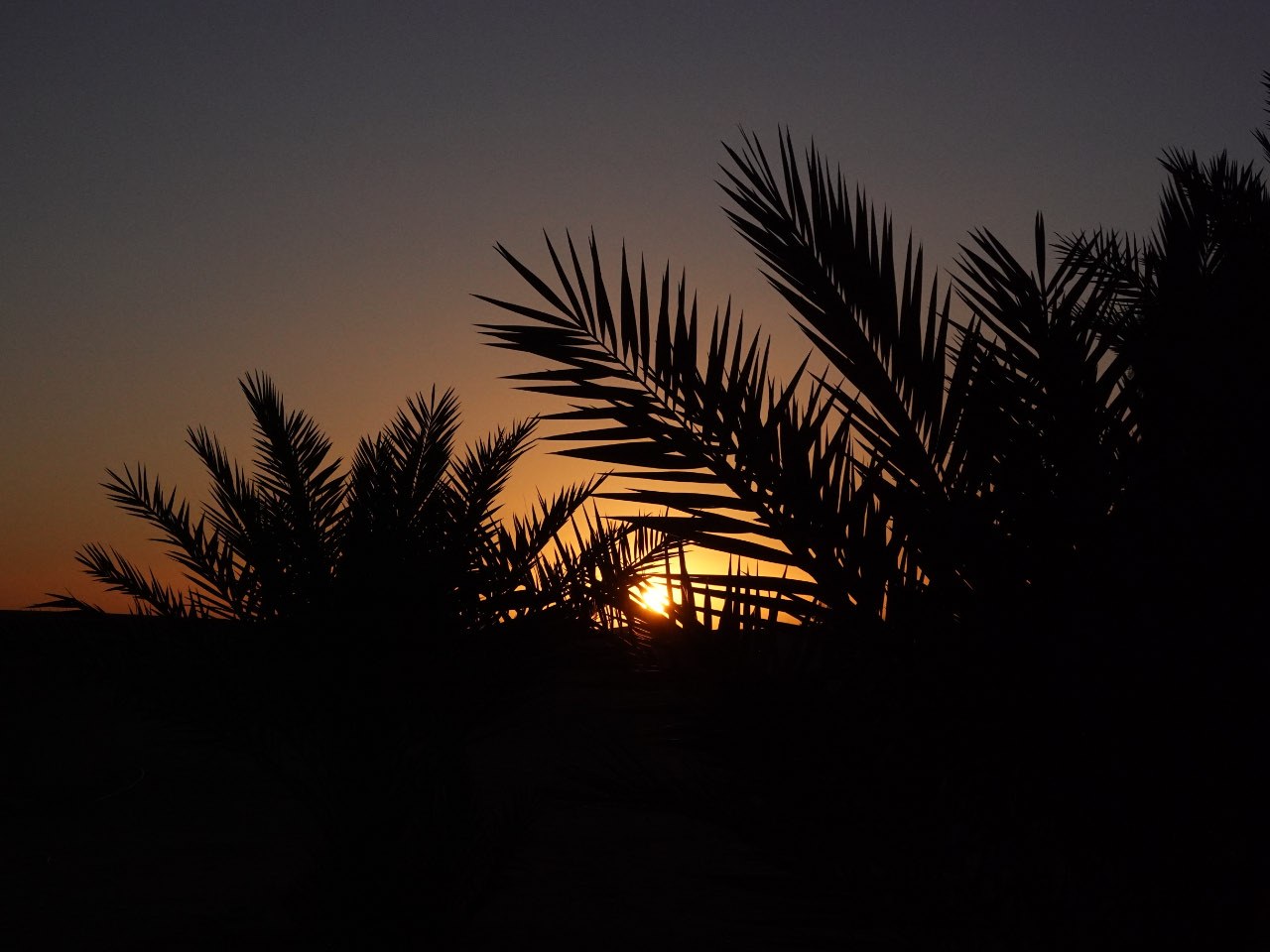 Sunset at Sahara Sky Luxury Desert Camp, Merzouga MA
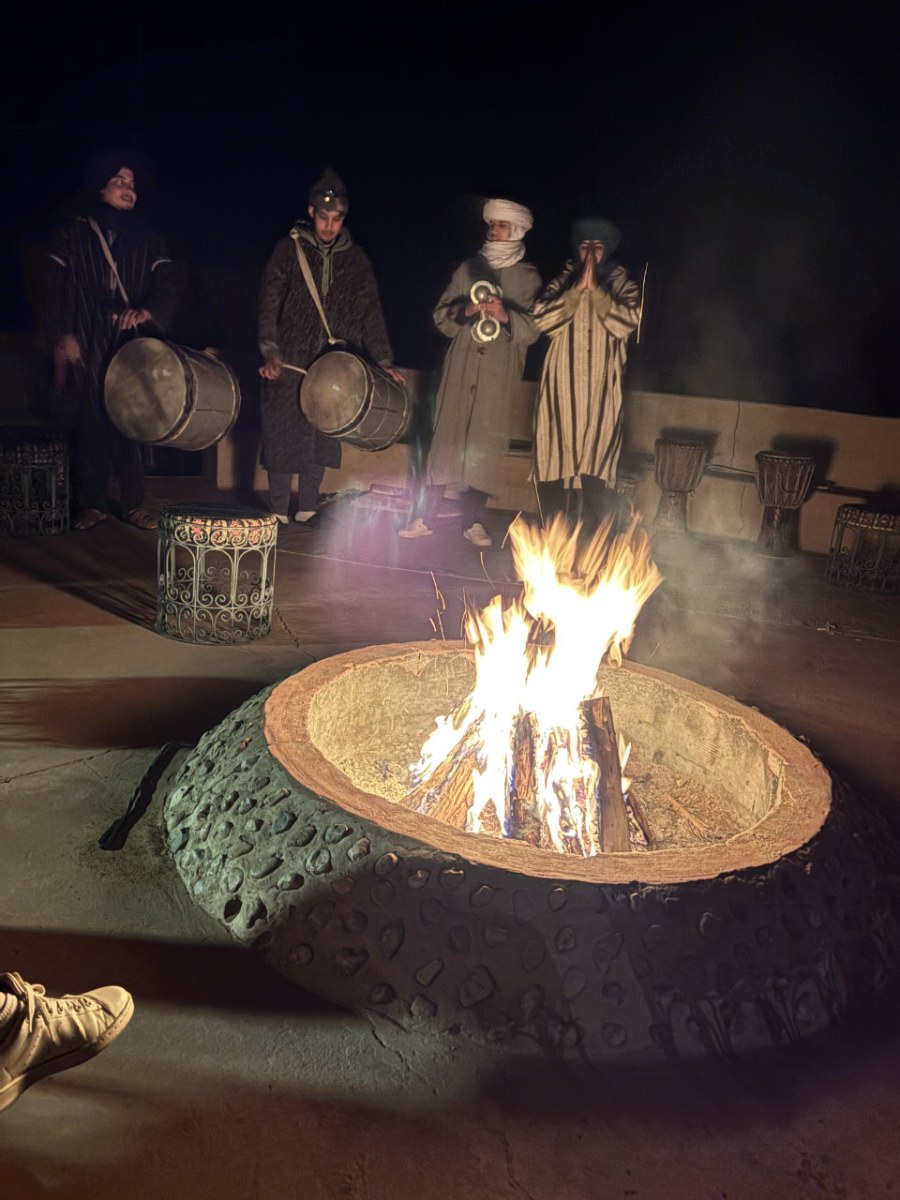 Musical entertainment at the Sahara Sky Luxury Desert Camp, Merzouga MA
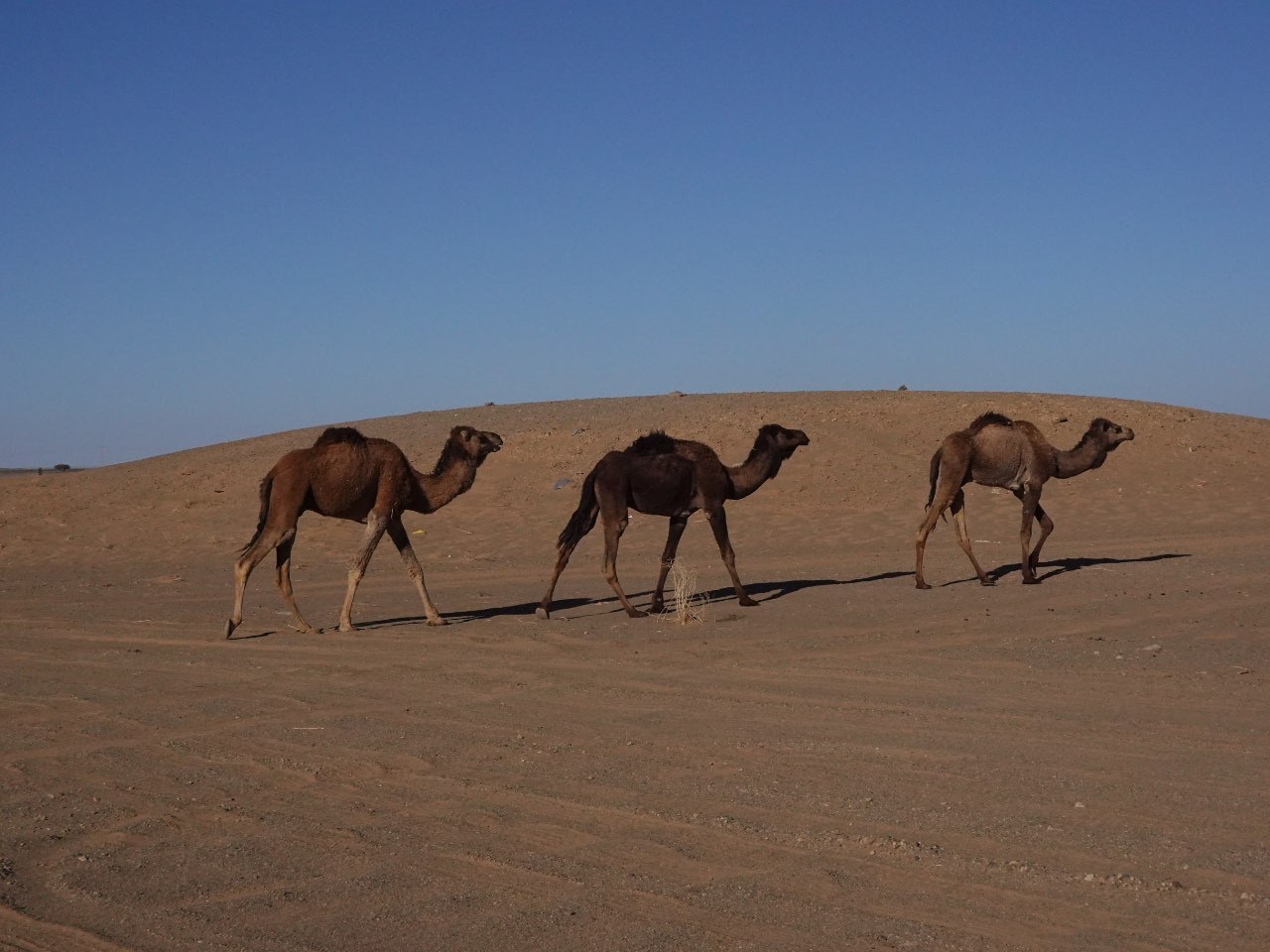 Four wheel drive through the desert from Sahara Sky Luxury Desert Camp, Merzouga MA. Young camels
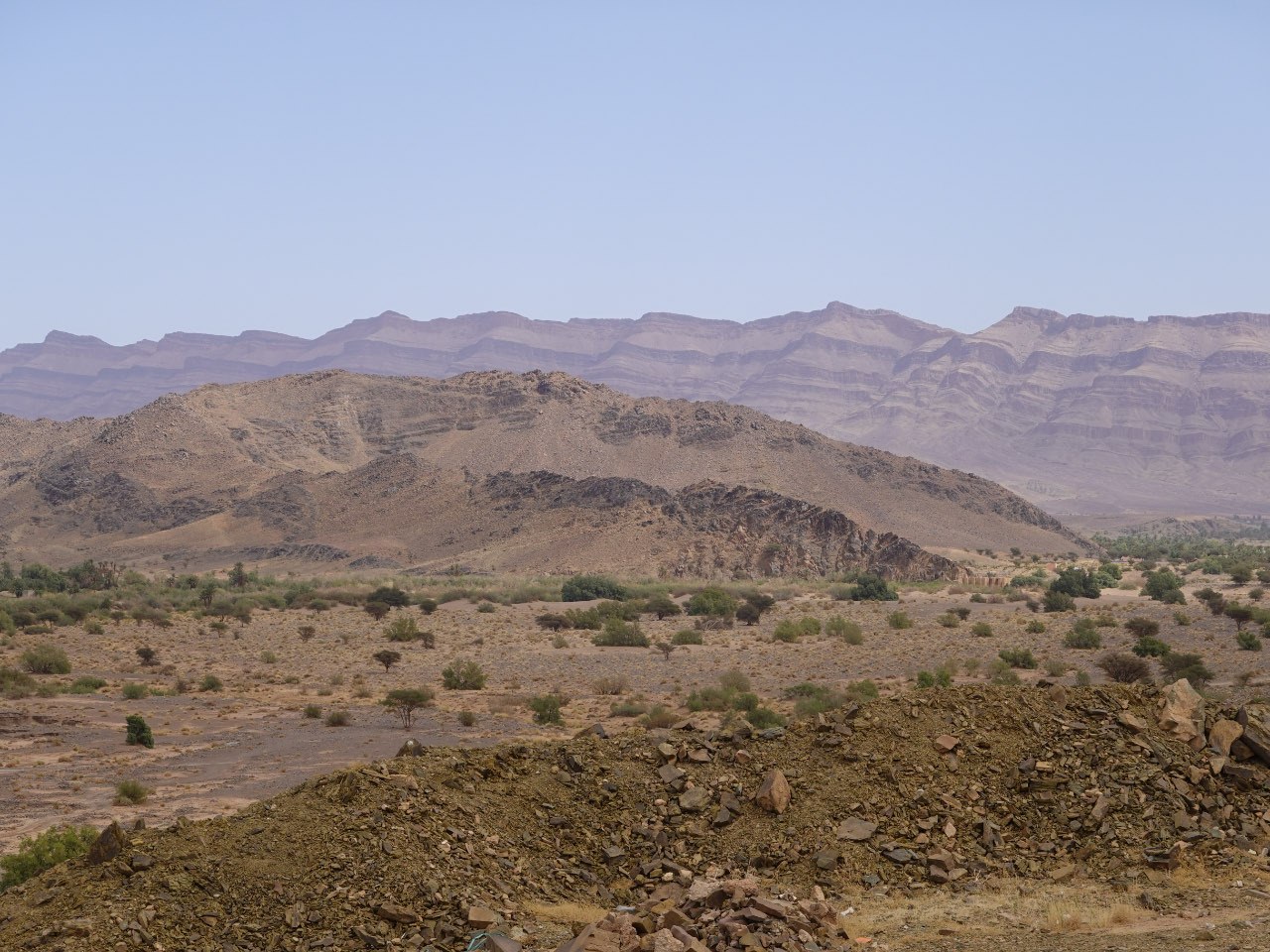 Viewpoint, looking over Agdz MA
 Amazing stone mountains near Agdz MA
 Kasbah de Taourirt, Ouarzazate MA
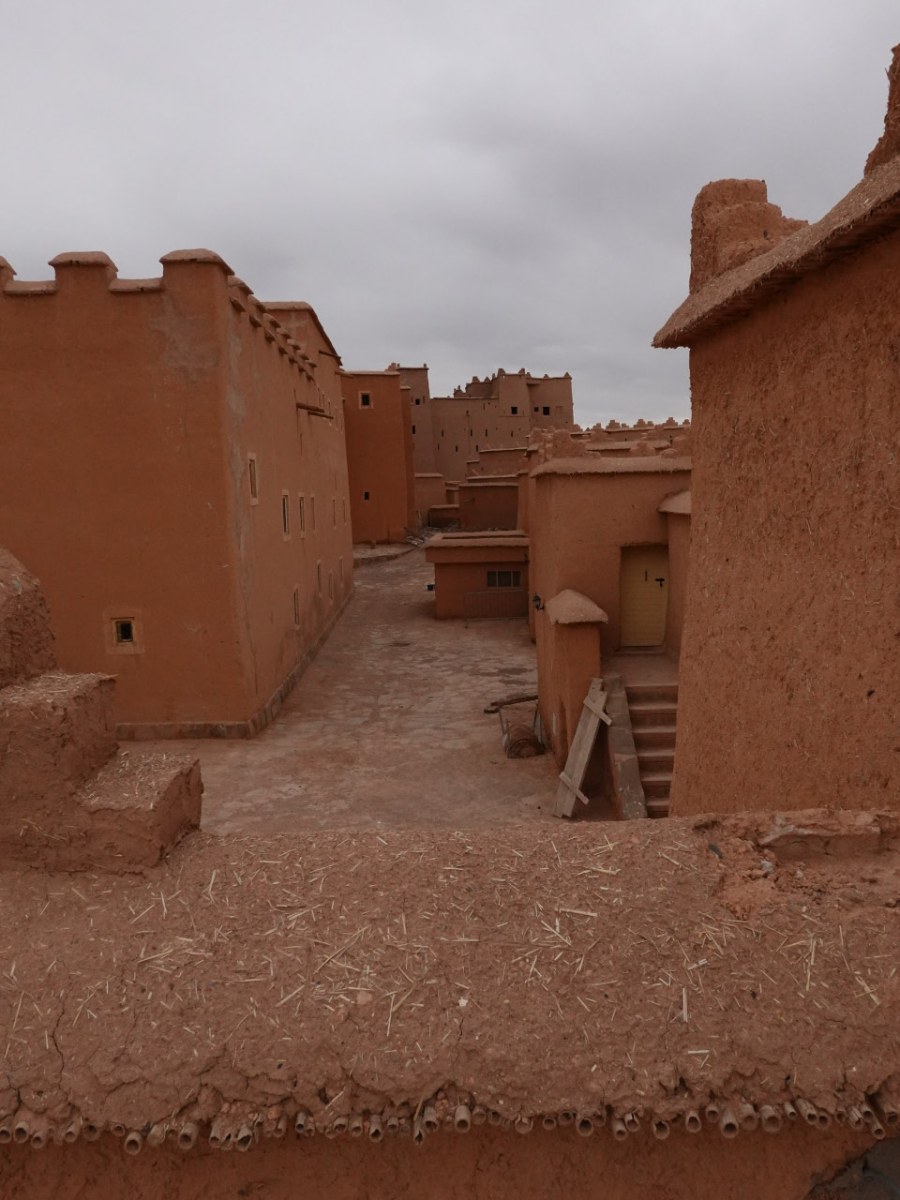 Kasbah de Taourirt, Ouarzazate MA
 Kasbah de Taourirt, Ouarzazate MA
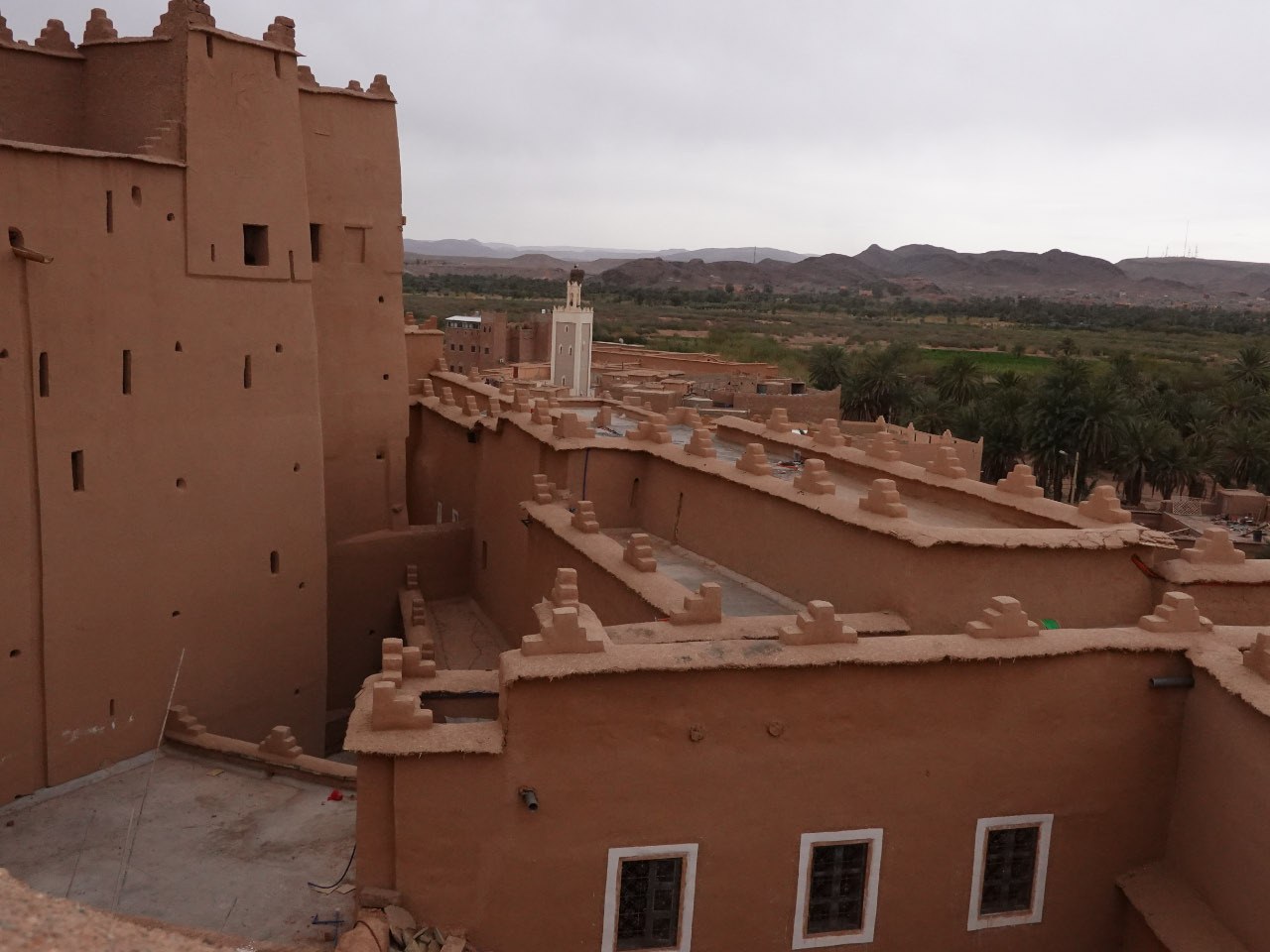 Kasbah de Taourirt, Ouarzazate MA
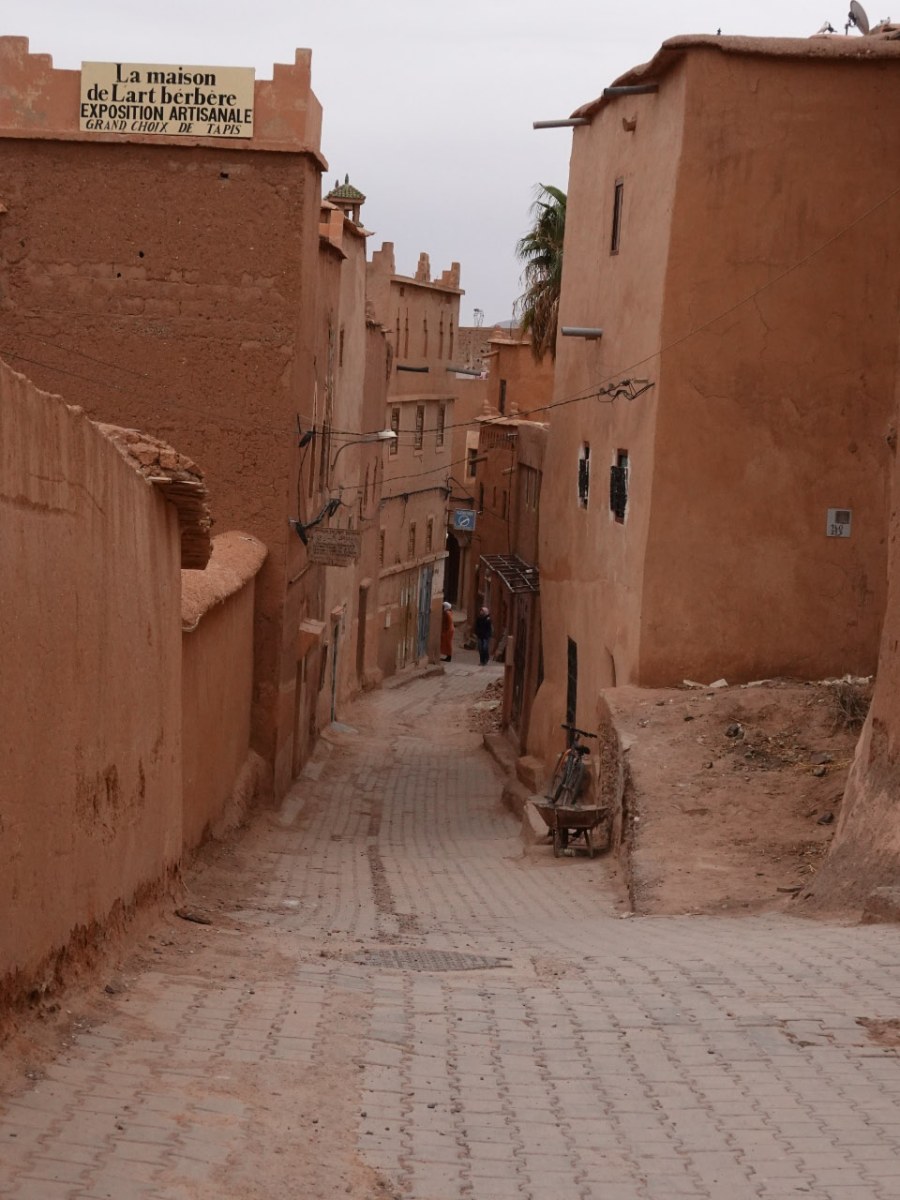 Old medina, home for Muslims, Jews and Berbers, Ouarzazate MA
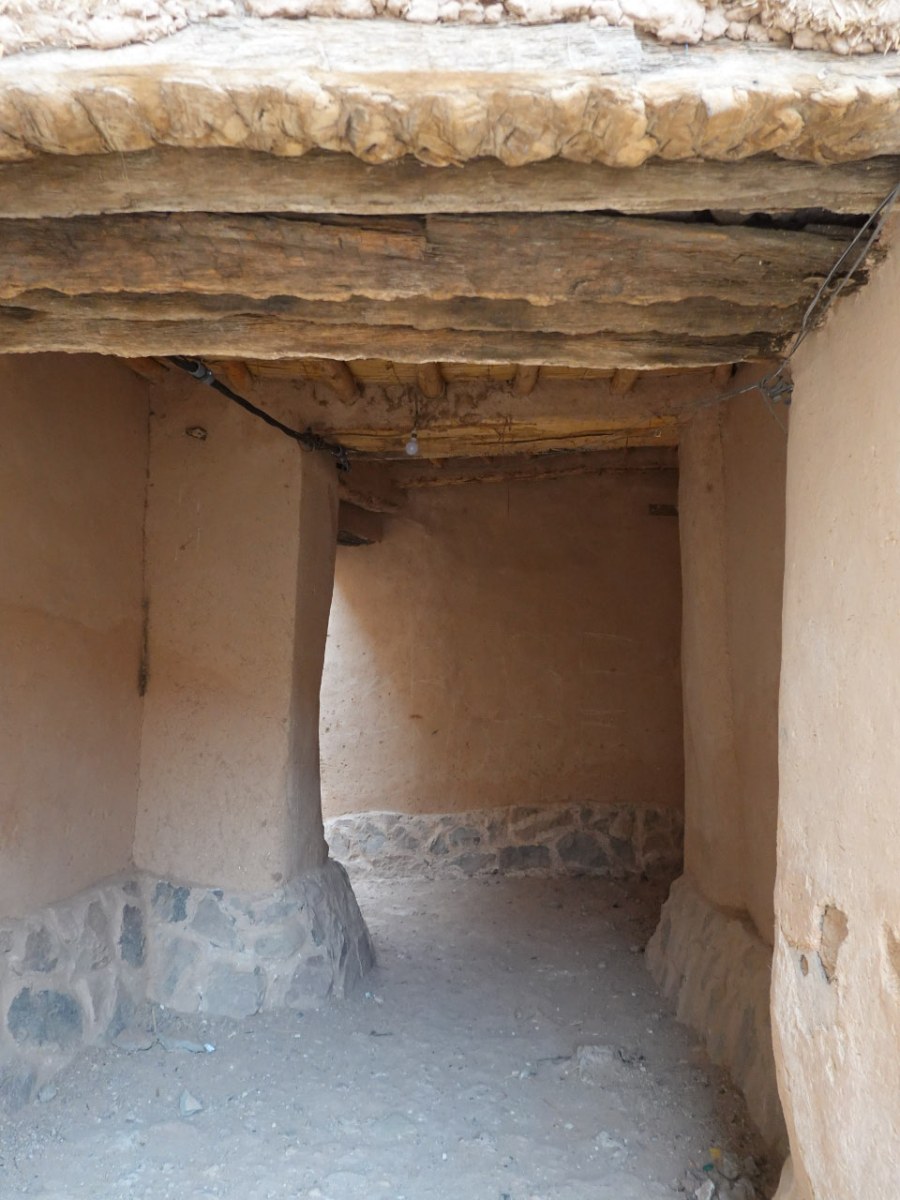 Old medina, home for muslims, Jews and Berbers, Ouarzazate MA
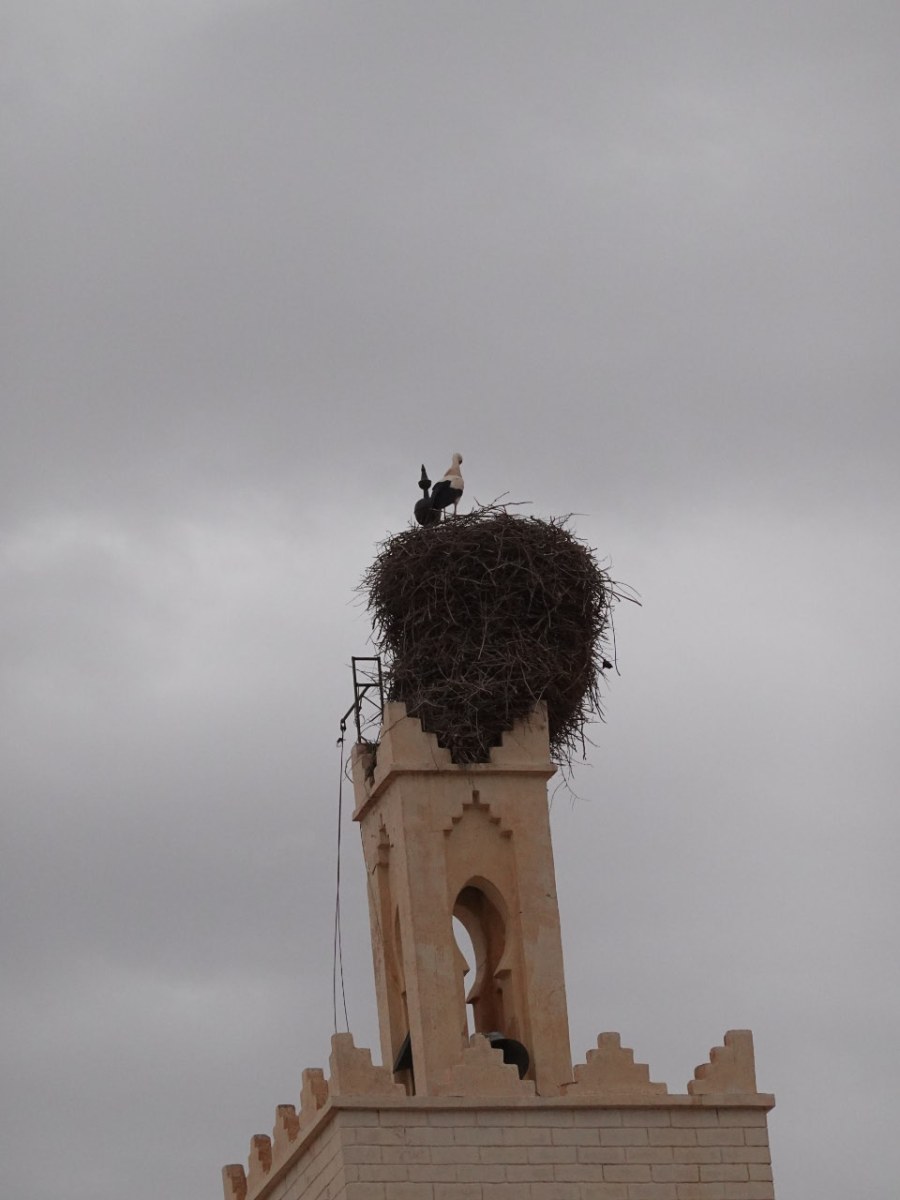 Old medina, home for Muslims, Jews, Berbers and storks, Ouarzazate MA
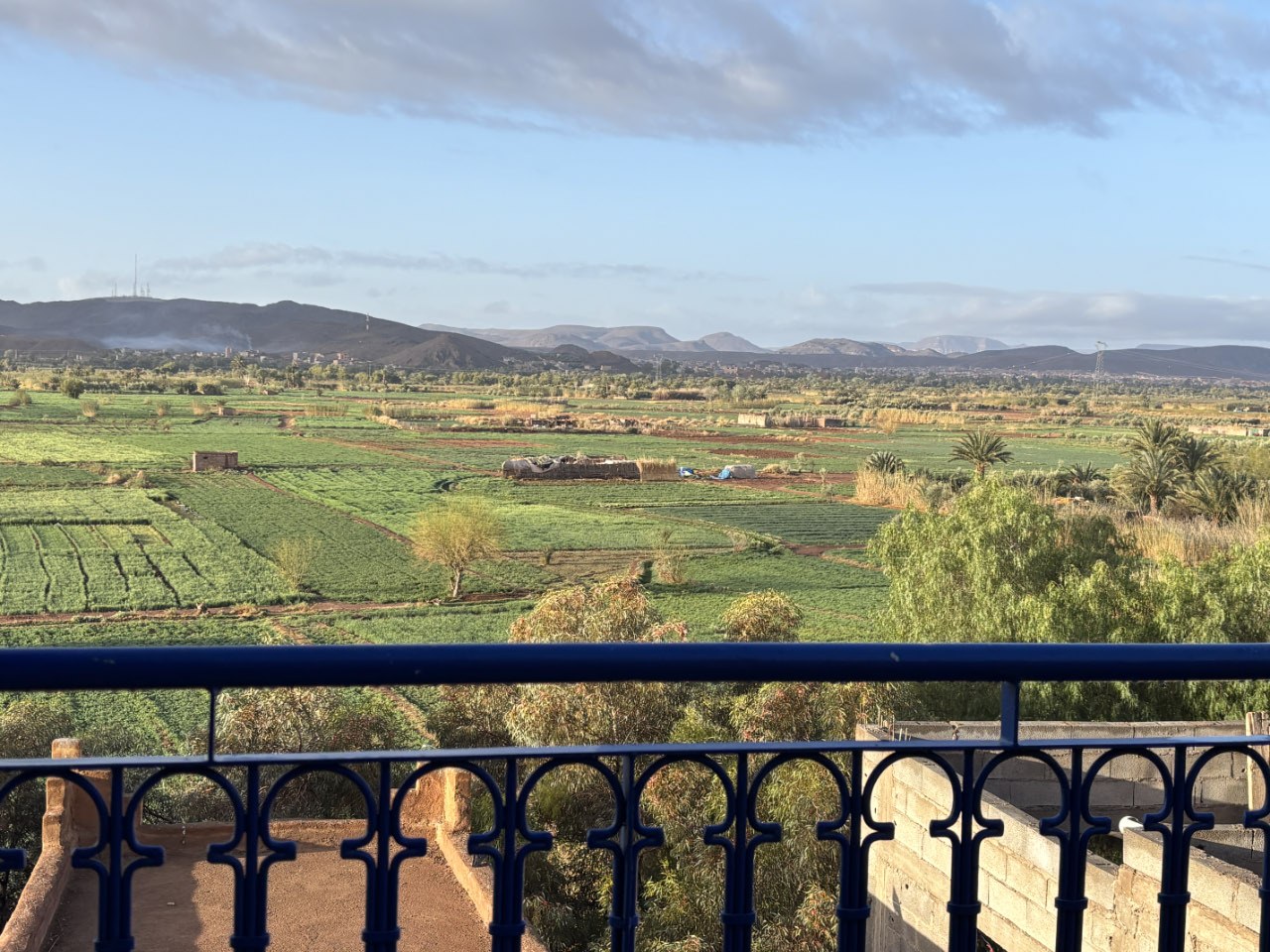 Around the Dar Amoudou Hotel, Ouarzazate MA
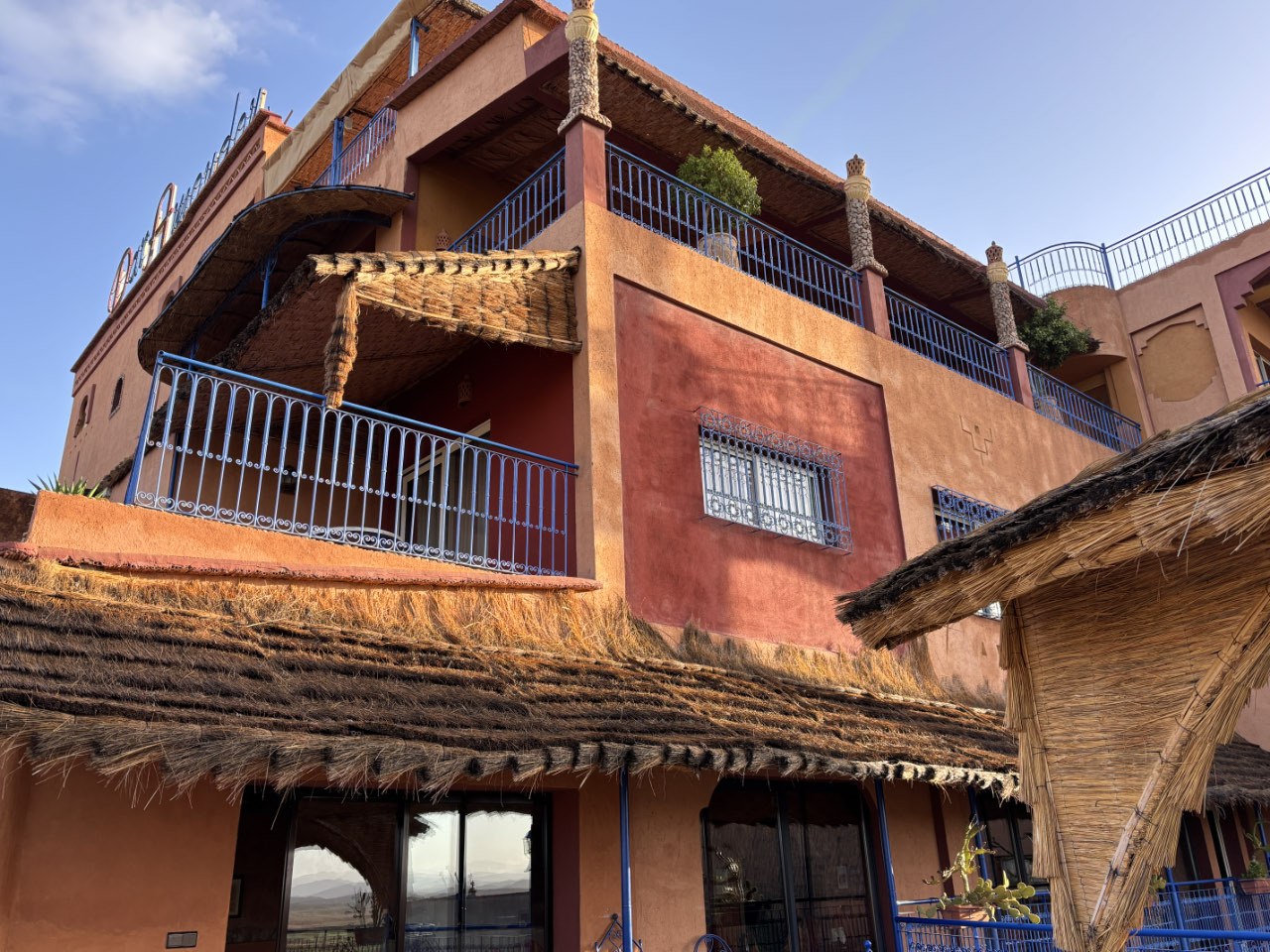 Around the Dar Amoudou Hotel, Ouarzazate MA
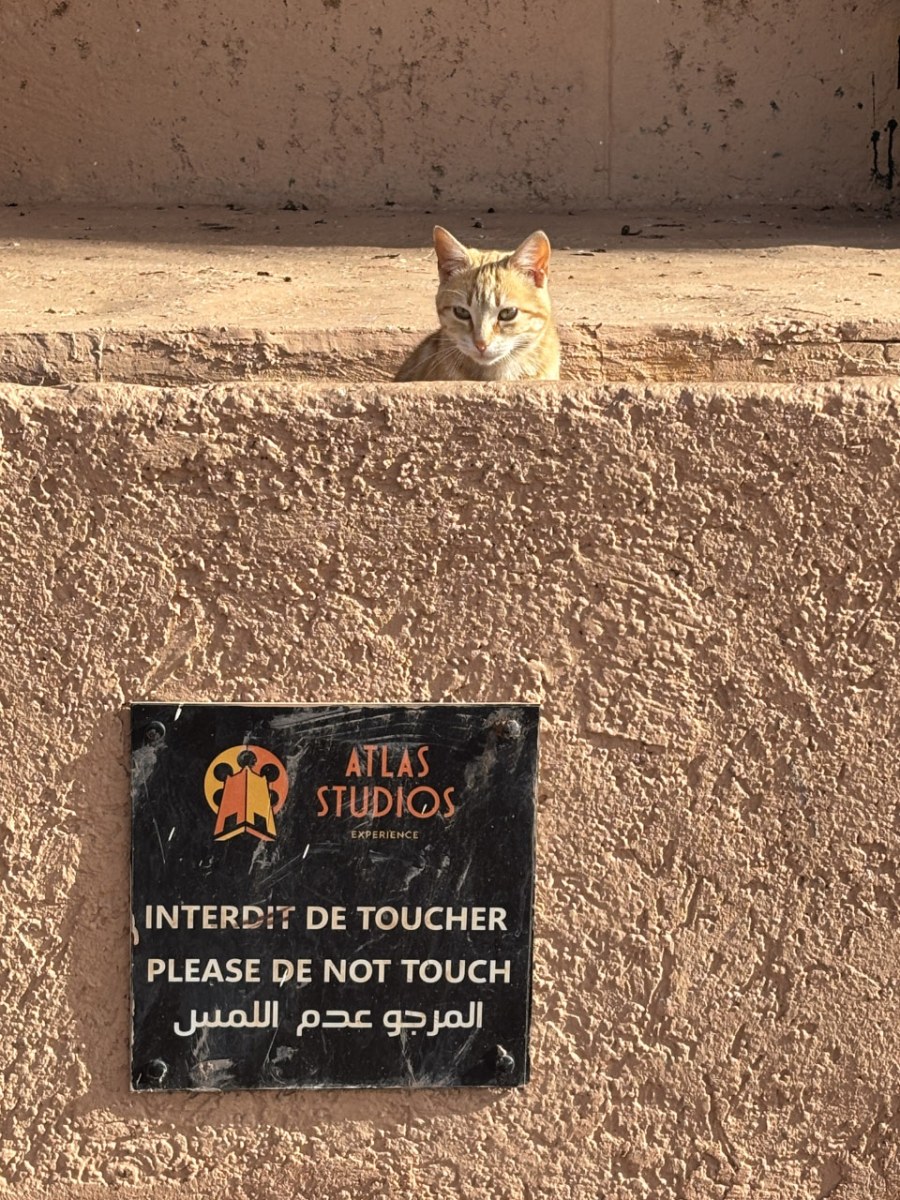 Atlas Film Studios, Ouarzazante MA
 Atlas Film Studios, Ouarzazante MA
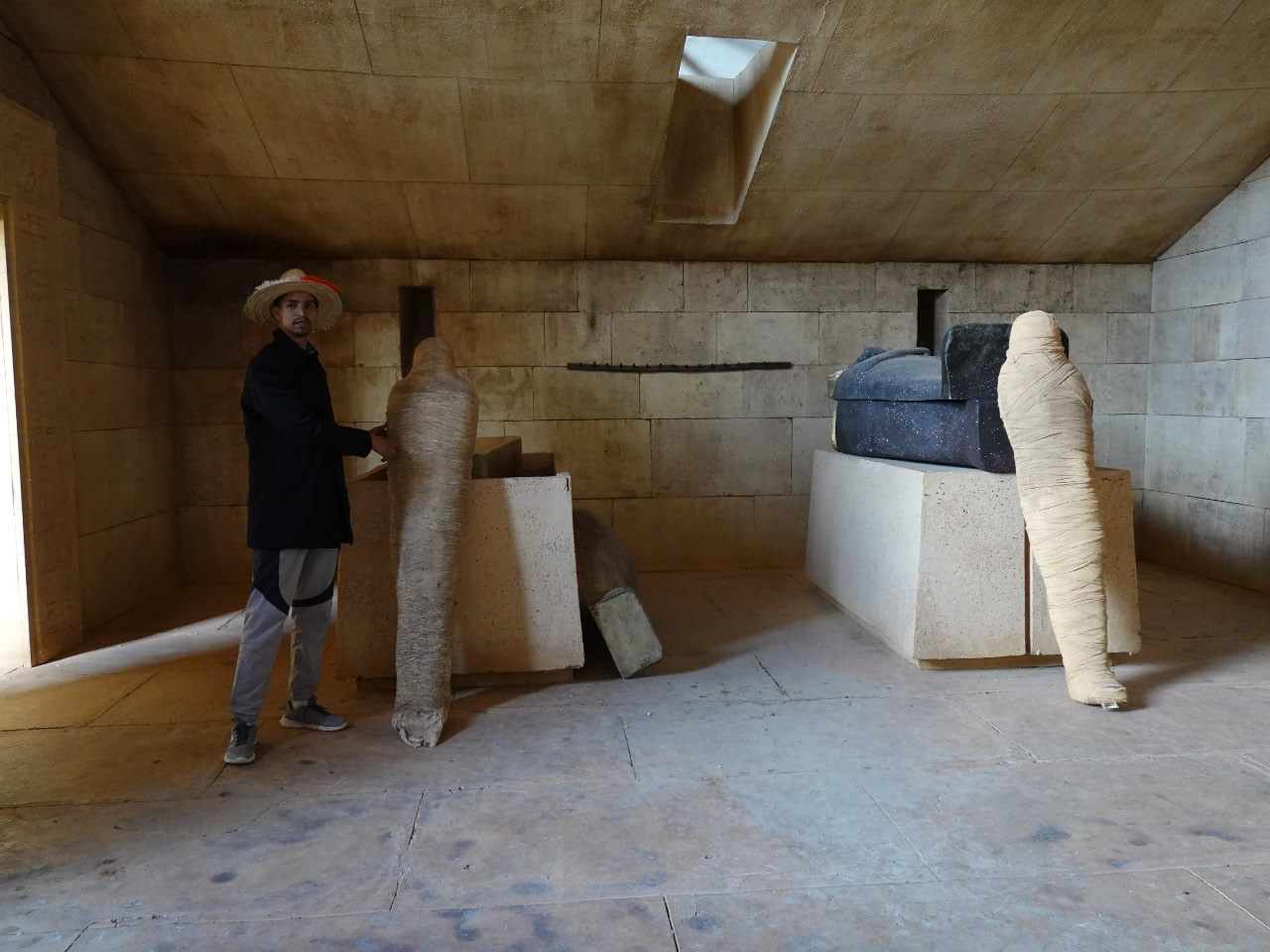 Atlas Film Studios, Ouarzazante MA. The Mummy
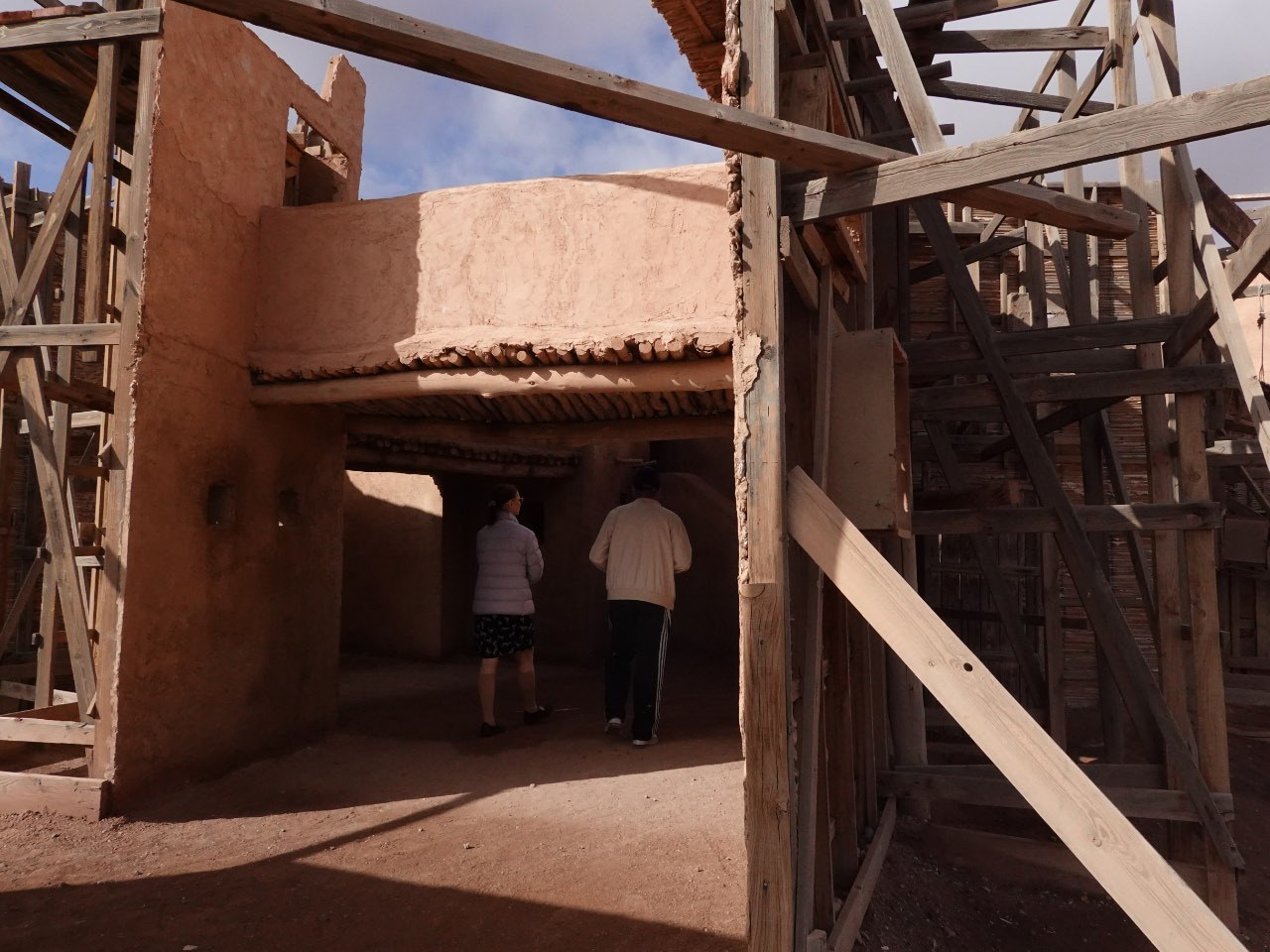 Atlas Film Studios, Ouarzazante MA
 Atlas Film Studios, Ouarzazante MA. Dressing up for Jesus movie
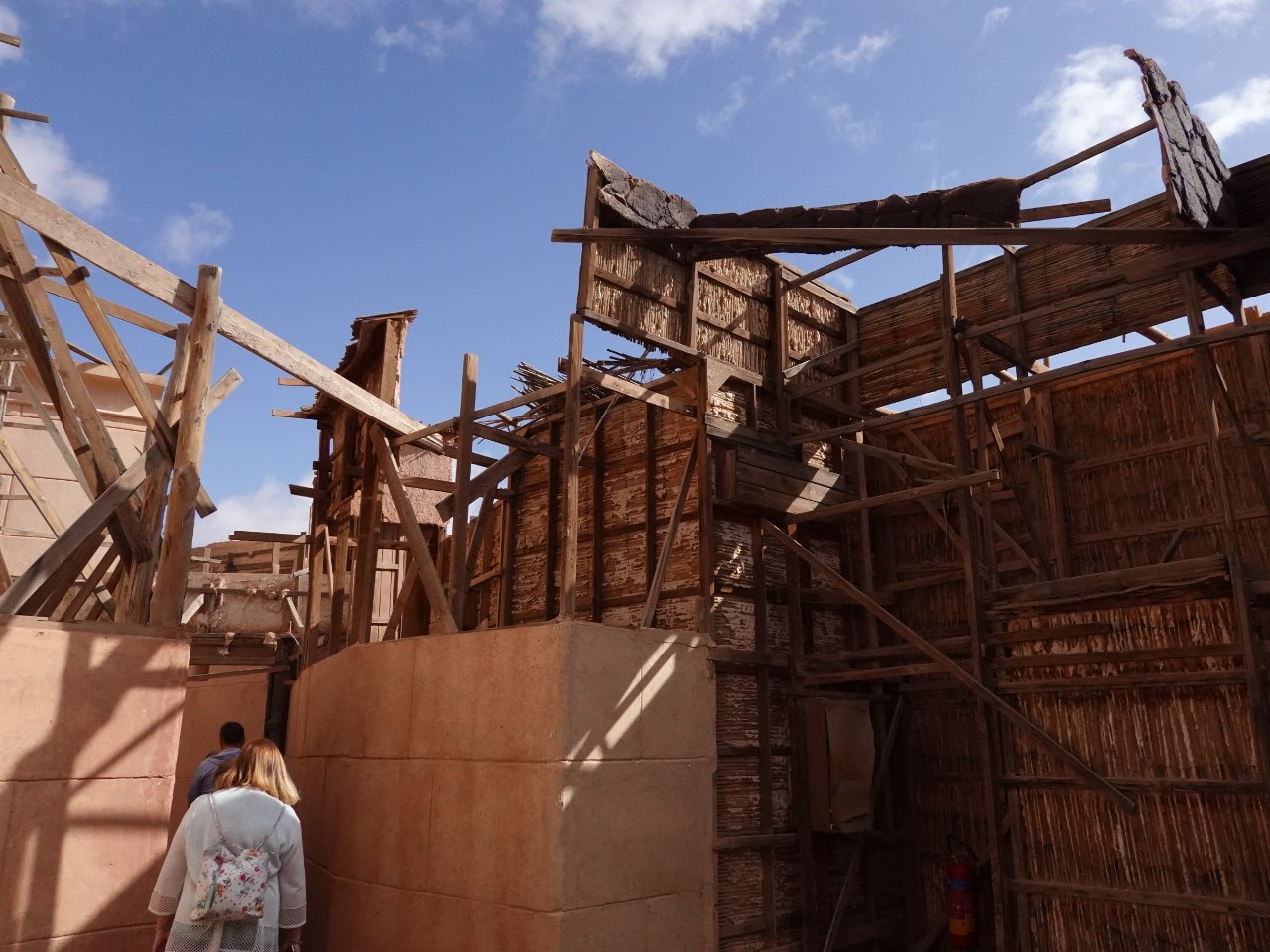 Atlas Film Studios, Ouarzazante MA
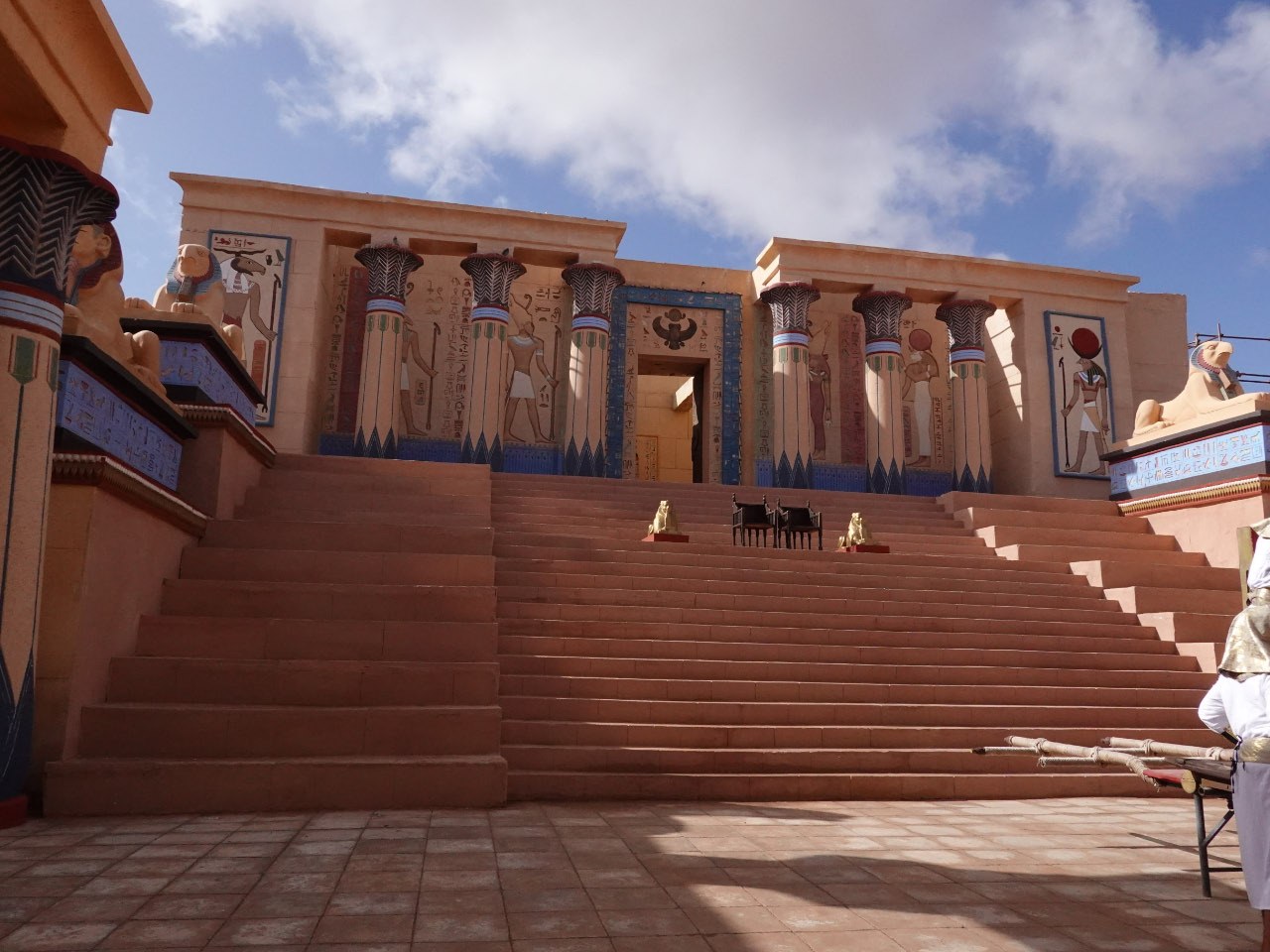 Atlas Film Studios, Ouarzazante MA. Cleopatra set.
 Atlas Film Studios, Ouarzazante MA
 Looking over the Atlas Mountains at Cafe Nature Toufliht, Toufliht MA
We arrived in Casablanca 52 years after our last visit to Morocco. We didn’t get this far south, we only reached Fez in our VW campervan. I can’t remember modesty as we see now – perhaps I was naïve in my short shorts and singlet top, So this time we’re looking forward to exploring more of the country.
Casablanca is a big city and it had two major attractions for us.
The first is the mosque. The Hammet II Mosque is the third largest in the world after two in Saudi Arabia. This one was extraordinarily decorated and large. It sits on the edge of the Atlantic Ocean.
The second attraction is the reinvented Rick’s Café from the movie Casablanca. We stopped there and had a lovely lunch with fantastic service. coincidentally, we had watched the old movie on our flight here.
It’s Ramadan so we have really been challenged to have a meal as most restaurants are closed and alcohol is not permitted in this period, except in international hotels.
We set off next day to go east. Our destination was Murzeug in the Sahara desert close to the Algerian border, about 440 km as the crow flies.
There was a lot of driving, a lot of sitting in the Mercedes mini bus, just the two of us and our driver Mahdi.
Our first stop was Xaluca Dades Hotel in Imlil, at 1,820m in the Atlas Mountains. It would be fair to say that the hotel was really a guest house which had 13 rooms. We walked into the Berber village, there was little more to do there than photo opportunities of the high mountains around us. The Tagine meal is rather disappointing as it lacked flavour, I think we were spoiled with flavours in Tunisia.
We had a 7am start and headed back towards Marrakesh then drove east to the desert. The stony desert at an elevation of about 1,200m just kept going and going.
We stopped at Dades to see the Kasba, which is a fortified town. We hired a guide who took us up to the top of the old village where the ninth century fort is. The view across the valley was amazing.
We opted for an easy salad lunch, similar to the Tunisian salad but without the tinned tuna. It’s finely chopped tomato, onion and cucumber, generously laced with olive oil and lemon juice. It became a favourite.
The hotel in Dades was sumptuous, quite a contrast from the little guesthouse the previous night. It was set high in the village with fantastic views all around. For the first time, we saw a lot of tourists, and they were hungry, going by the rush in the dining room.
We set off east again, but via the Toudgha Gorge, a narrow 300m wall, carved deep into the mountains. Then it was a very long journey to Merzouga and the Sahara Sky Luxury Desert, just 17km from the Algerian border. The orange sand was bright and cheerful, after hours driving through the stony desert mountains.
We were entertained at the camp by four waiters, come musicians with their drums. We even learnt a few beats,
Another long drive to Ouarzazate, over 400km. It was Ramadan and our driver was fasting. We worried about his concentration on these long drives. Fortunately he appeared to manage without loosing too much energy.
We spoke to a number of Moroccans, and the singular message was that Ramadan was a time of reflection, detoxifying and importantly, family time. They appreciated it.
We hired a guide to show us the Taourirt Kasbah in Ouarzazate. I appreciated seeing how the homes were laid out for one or more families. Renovation of the Kasbah is nearly complete, following an earthquake in 2023. It had some beautiful rooms.
After an interesting night in a Berber guest house, we toured the Atlas Film Studios. These are a huge source of revenue for Morocco. Netflix, HBO and others use these studios for big movies and quick to air series. The Russian tourists in our guided tour enjoyed the opportunity to dress up and play the parts.
As we drove down towards Marrakesh we passed through tiny villages where the local Muslim men and women were traditionally dressed. There were small market stores or shop fronts selling groceries, meat, fruit and vegetables, clothing and all the necessities of life.